Artistes au Muséum
Muséum national d'Histoire naturelle - Grande Galerie de l'Évolution
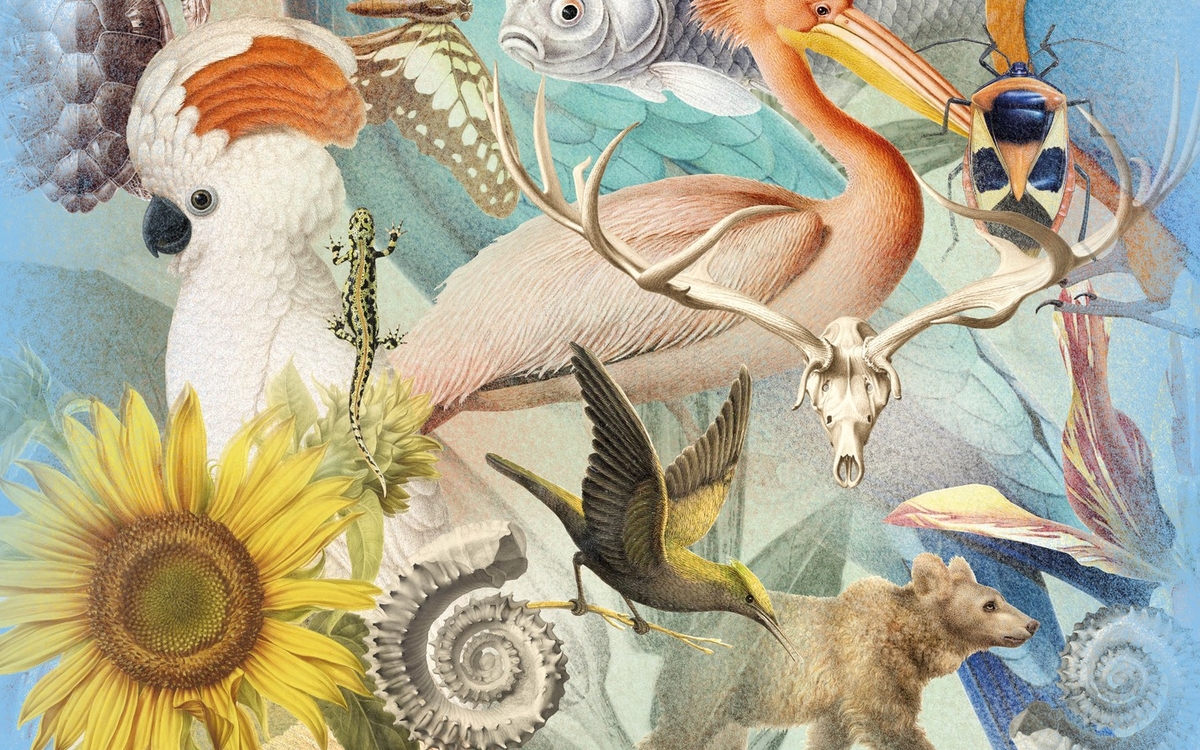
To celebrate the Muséum's 400th anniversary, its rich art collections are being unveiled in an exhibition of unprecedented scale! From scientific explorations to contemporary artists inspired by natural history, explore the profound connections between art and science through more than 300 exhibited works. Thanks to its galleries, its greenhouses and its ménagerie, the Muséum offered the man nicknamed "le Douanier Rousseau" the opportunity to observe exotic animals and plants without leaving Paris. Like him, a multitude of artists took advantage of this privileged access to the Muséum's collections and spaces, both to stimulate their inspiration and to contribute to the construction of naturalist knowledge. Across the centuries, the representation of animals, plants and minerals has proven indispensable to the development of the natural sciences. Since its creation in 1626, the Jardin des Plantes has been the setting for a genuine symbiosis between art and science. Painting, sculpture, drawing, photography, taxidermy, cinema, architecture… Journey through 400 years of perspectives on a science that never ceases to renew itself. Entrance of the artistsWho are the artists at the Muséum? The institution attracts a wide variety of profiles: researchers describing new species, painters fascinated by scenes of wildlife, a drawing teacher passionate about zoology, or even a photographer playing with underwater light. Some attended an art school, others trained in biology, but all frequented the Muséum or took part in expeditions to feed their work. Whether they became famous or remained in the shadow of laboratories, their work celebrates the beauty of the natural world through the pursuit of scientific accuracy. The making of the scientific imageHow do artists and researchers work to produce scientific images at the Muséum? Drawing, engraving, painting or even photography: different techniques are employed to meet the challenges of representation in the natural sciences. The creation of these images follows certain steps and responds to very precise standards in order to accompany and complement the discourse produced by researchers. The Muséum thus becomes a laboratory of experiments that are not only biological but also artistic, where often innovative processes are developed. Painting on vellum, camera lucida, microscopy, the use of colors… Between age-old traditions, new technologies and the illusory quest for a perfect objectivity, scientific imagery casts a particular gaze upon the world, one that finds echoes in other artistic practices. A real art gallery!From the 17th century onward, there existed at the Jardin des Plantes an artistic production aimed at promoting the institution and making naturalist knowledge accessible to as many people as possible. Beyond being a place of research, it was also a showcase of royal power, as attested by richly detailed engravings and plans. After the Revolution and the fall of the monarchy, the Muséum continued to commission spectacular statues or paintings from great masters. It acquired various art collections to amaze visitors and called upon famous architects for its buildings. Artists such as Salvador Dalí, Bernard Buffet, François Pompon, Chris Marker, or even Alberto Giacometti came to find inspiration in this exceptional setting. The presence of artists there is encouraged through reserved hours, residencies and exhibitions. Wander through the Muséum's different worlds to encounter their works. Committed artistsThe relationships between arts and sciences are evolving alongside the contemporary challenges facing the planet's future. As a major scientific reference, the Muséum attracts creators concerned with these issues. Some partner with researchers to raise awareness about the effects of global warming, pollution, and the mass extinction of species.
Source: Paris Open Data ↗