Chaïm Kaliski. « Jim d’Etterbeek »
Musée d'Art et d'Histoire du Judaïsme
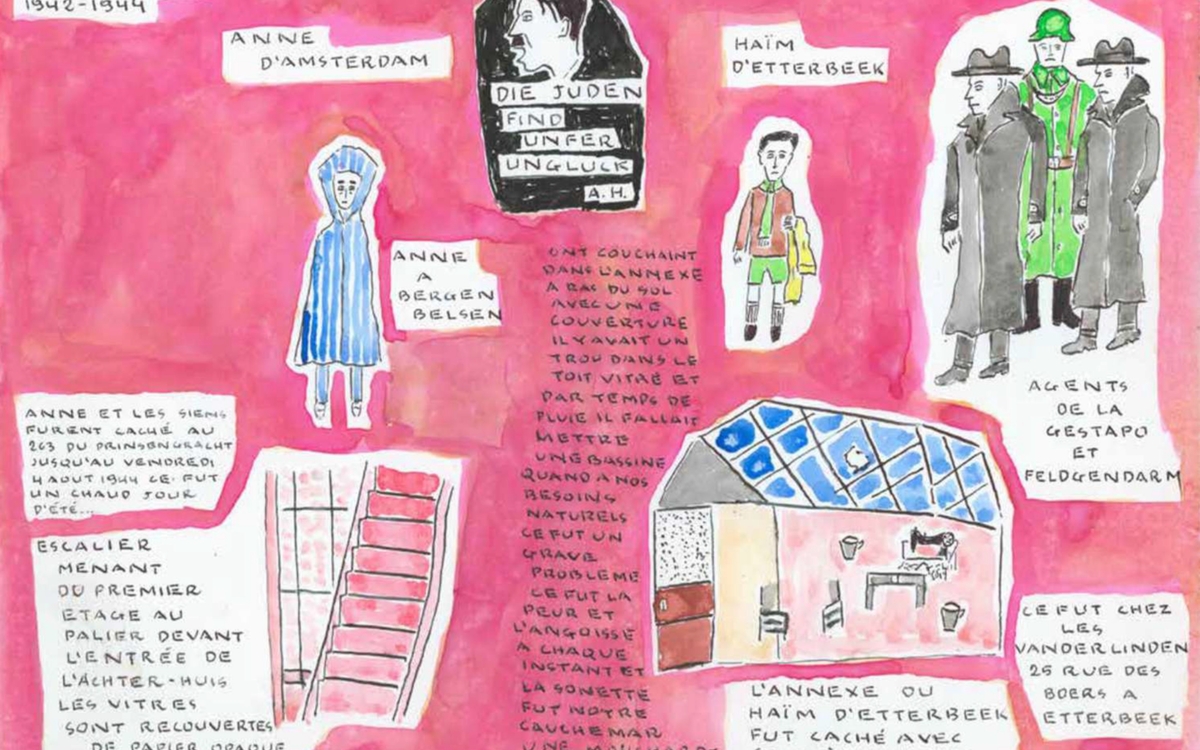
Exhibition of about a hundred ink drawings drawn from a monumental work about the Occupation of Brussels, comprising more than five thousand drawings by Chaïm-Charles Kaliski (1929-2015), a singular being whose existence was forever marked by the Shoah. A graphic double of the artist Chaïm Kaliski (1929-2015), Jim d'Etterbeek is the title of this drawn work about the Occupation of Brussels. The eldest of four children, Chaïm Kaliski was born in Brussels in 1929 into a Polish Jewish family. His father, Abraham, was a leatherworker, his mother, Fradla, a seamstress. The occupation of Belgium in May 1940 upended their existence. After fleeing to France ahead of the Wehrmacht's advance, the Kaliskis returned to the Belgian capital for lack of resources. What followed was a survival that bordered on miraculous, as they escaped checks, denunciations, and the great roundup of the Jewish quarter of Cureghem on September 3, 1942. But Abraham was arrested on February 12, 1944. Fradla then managed to place her youngest children and went into hiding with Chaïm, until the Liberation in September 1944. For Chaïm, life stopped on the day of his father's arrest, a trauma he would relive throughout his entire existence. It was at the age of sixty, in 1989, on the advice of his sister Sarah, herself a painter, that he undertook to draw their story, to which he would devote himself for eighteen years, producing thousands of drawings. The line, childlike at first glance, is nonetheless assured: scenes of arrests, of roundups that obsess the artist, who remained forever a "hidden child," marked by the fear and anguish tied to images imprinted on his retina. Drawn primarily in India ink, these heart-wrenching scenes combine text and image. They consist of "very sonorous" drawings, evoking cries of terror, screams, the roar of truck engines or the clatter of weapons during the roundups, forming a whirlwind to which recurring refrains are added, like obsessive litanies. The reader discovers a Jewish community on the verge of annihilation through the conversations between the artist's father and the acquaintances he encounters during his wanderings.
Source: Paris Open Data ↗