Cheryl Marie Wade, reine-mère des noueux. Lucie Camous & Étienne Chosson
Palais de Tokyo
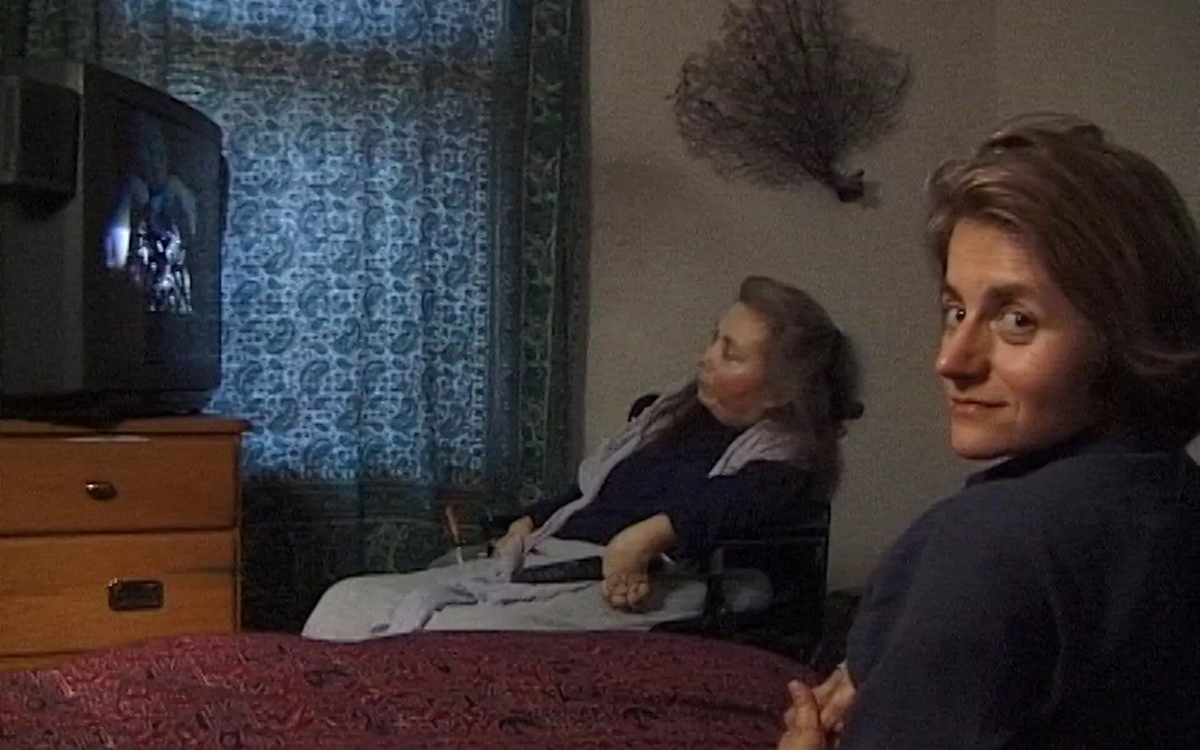
Nicknamed The Queen-Mother of Gnarly, Cheryl Marie Wade (1948–2013) built a body of work that blends poems, one-woman shows and songs. Her practice emerged within women's discussion groups, before unfolding in the form of performances before an increasingly large audience. Her performances were later distributed on VHS tapes sold by mail order once her health no longer allowed her to go on stage. Within a scene of disabled artists that developed in Berkeley, California, in the late 1970s, she reclaimed, along with others, the insult of cripple to form the word crip. Together, they detached disability from medical discourse in order to affirm it as a sensitive and shared experience of the world. As part of a documentary intended for French television, the director and disabled activist Diane Maroger met Cheryl Marie Wade, gathered her poems and made numerous trips back and forth to Berkeley in the early 2000s. This work resulted in dozens of hours of film documenting the handix community in California, before the project was abandoned by the producer for lack of a broadcaster. Twenty-five years later, this exhibition becomes an editing room in which to view the performances and interviews of Cheryl Marie Wade, whose work had until now remained on the margins of the art world. These images are brought into dialogue with the works of contemporary artists who have direct or metaphorical ties to the Berkeley crip scene. The connections that form are as much sketches of possible films as they are reflections on what makes certain works accessible, or not, to us.
Source: Paris Open Data ↗