Cycle « C'était Paris en 1970 »
Bibliothèque historique de la Ville de Paris (BHVP)
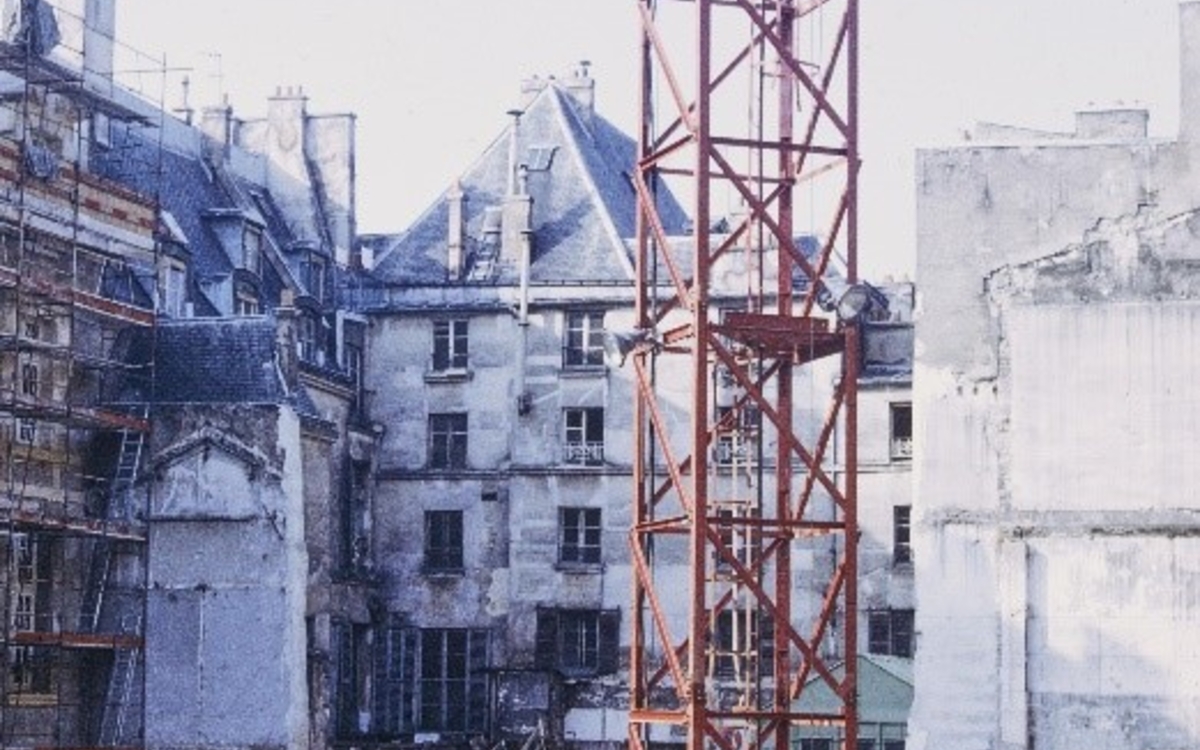
The Bibliothèque historique presents a new exhibition and a series of lectures around its photographic collection "C'était Paris en 1970". Exhibition C'était Paris en 1970 (1 June - 7 October 2026)The Bibliothèque historique presents a new exhibition around its photographic collection "C'était Paris en 1970". Immerse yourself in the Paris of the 1970s through photographs taken by amateurs of the time. Free admission, Monday to Saturday, 10am to 6pm Lecture seriesLe Marais, entre îlot insalubre et secteur sauvegardé - Wednesday 3 June - 7pmIn 1964, the secteur sauvegardé of the Marais was one of the first applications of the 1962 law. This law was adopted to reconcile the desire to clear insalubrious housing blocks with the need to more broadly protect an urban district, particularly in the context of the radical urban renewal carried out in the 1960s. By Isabelle Backouche, directrice d'études at the EHESS. Photographier la "Reconquête de Paris" - Wednesday 10 June - 7pmIn the mid-1950s, Pierre Sudreau launched the "Reconquête de Paris", a determined policy aimed at rebuilding a city that had certainly been spared by the bombings, but which had been accused since the interwar period of suffering from urban and architectural backwardness. The major works gave rise to a new heritage awareness that is often underestimated. Thus, the competition "C'était Paris en 1970" can also be read as a participatory heritage policy, which fortunately complements plentiful public collections that are sometimes incomplete and little known to the public. Having been entrusted in 1898 with "the preservation of the appearance of parts of the city destined to disappear," the Commission du Vieux Paris did not fail in its duty during the Trente Glorieuses. Here are two collections which, although very different, both testify, today as in the past, to the immense interest of urban transformations and photographs. By Pauline Rossi, head of the archives of the Commission du Vieux Paris. Automobile et transformation des mobilités parisiennes - Wednesday 8 July - 7pmAt the beginning of the 1970s, mobility in the Paris metropolitan area found itself in an ambivalent situation. While the automobile had become widespread to the point of producing forms of congestion, it had also driven the expansion of a new suburban way of life, based on highway infrastructure then under construction. At the same time, other transport systems repositioned themselves in a context where they became alternatives rather than dominant modes, under the pressure of new profitability objectives: the opening of bus lanes, the extension of the métro into the suburbs, the creation of the RER, etc. This turning point of the 1970s thus saw the construction of a division of roles among modes of transport that has since fueled contemporary debates and political choices. By Arnaud Passalacqua, professor at the Université Gustave Eiffel. Concours photographique et aménagement des territoires - Wednesday 16 September - 7pmThis lecture proposes to examine the photographic competition as a recurring device for the visual representation of territories. Since the 19th century, these calls for participation have mobilized "amateurs," a category that, far from being homogeneous, brings together professionals working outside commissions as well as members of photo clubs or occasional practitioners. By orchestrating this diversity of positions and skills, the competition does not merely collect images: it contributes to bringing forth representations of territories, at the crossroads of political perspectives and vernacular experience. By Raphaële Bertho, Maîtresse de conférences at the IUT de Tours. C'était la banlieue en 1970 : un monde en profonde mutation - Wednesday 23 September - 7pmIn Paris as in the suburbs, the 1970s were marked by three major upheavals: the overhaul of local political institutions, the end of the golden age of industrial cities, and the beginning of the disintegration of "Paris rouge" and the "banlieue rouge". During this period, the final pages of the history of the Grand Paris were turned just as the "crise des banlieues" was beginning to make headlines. By Emmanuel Bellanger, directeur de recherches at the CNRS.
Source: Paris Open Data ↗