Éternel Tintoret
Musée Jacquemart-André
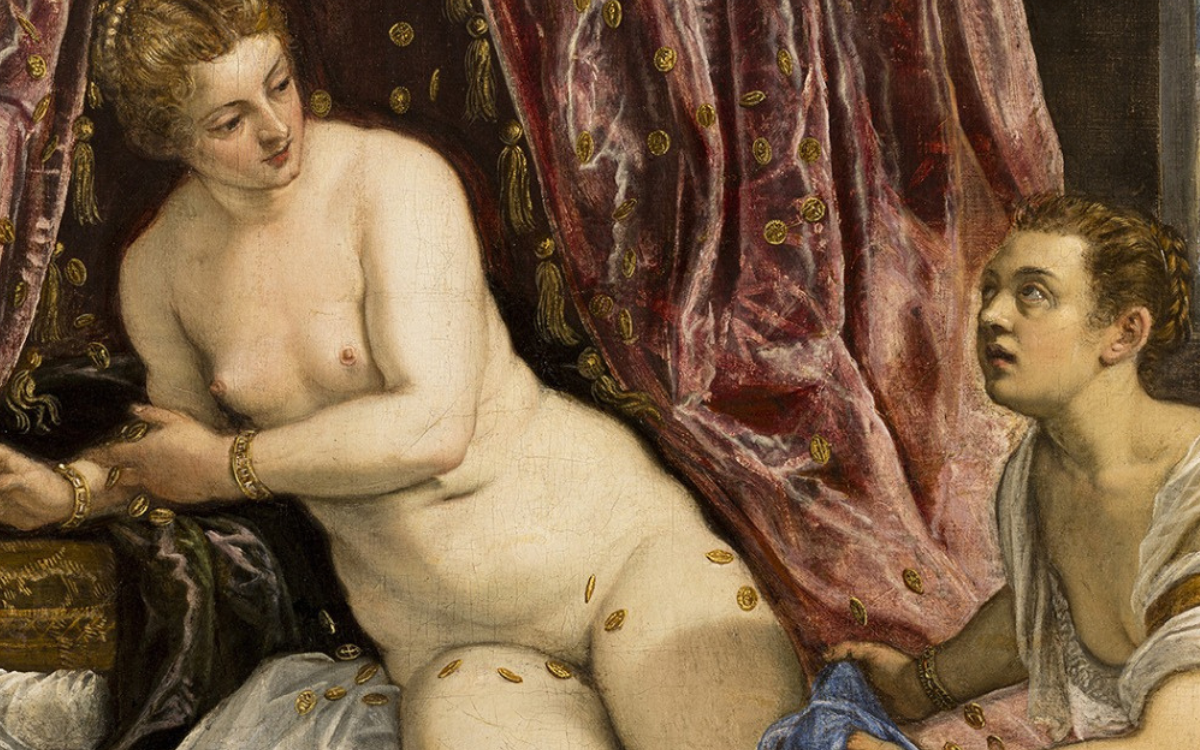
From 11 September 2026 to 24 January 2027, the Musée Jacquemart-André celebrates one of the principal figures of the Italian Renaissance, Jacomo Robusti, known as Tintoret (1518/19-1594). This exhibition presents for the first time in France a panorama of Tintoret's entire career and demonstrates how his artistic legacy extends across centuries and borders, making him a reference artist for nineteenth-century French painting. Jacomo Robusti, nicknamed "Tintoretto" in reference to his father's trade as a dyer, established himself as one of the major figures of sixteenth-century painting. He remained in Venise his whole life, where his ambition found fertile ground: it was in this city of great artistic influence that his exceptionally long career unfolded. Although his training remains poorly documented, he asserted himself from the late 1540s onward with prestigious commissions such as the Miracle de l'esclave (1548). With the support of a vast workshop, he dominated, in the second half of the century, the market for great decorative cycles intended for the city's institutions, such as the Palais des Doges (fresco of the Paradis, from 1588 onward) or the Scuola Grande di San Rocco (from 1564 to 1588). Revealing the full modernity of his art, the exhibition highlights the singularity of an artist endowed with incredible creative energy, whom Vasari regarded as the "most terrible spirit painting has ever known" (1568). A complex and unclassifiable artist, Tintoret developed a body of work as admired as it is debated, characterized by bold compositions, dizzying perspectives, spectacular effects of light, and the vivacity of his touch—the famous prestezza. By operating an original synthesis between the sculptural drawing (disegno) of the Tuscan masters, particularly that of Michel-Ange, who fascinated him, and the Venetian colorito of Titien, his rival, he brought the Renaissance in Venise to its peak. Bringing together some forty paintings and graphic works from public and private collections—French, Italian, and international—the exhibition offers a thematic itinerary allowing visitors to grasp the diversity and scope of Tintoret's work around several key themes. The great religious compositions, such as the Miracle de saint Augustin (1547-1549, Palazzo Chiericati, Vicence) or the Trinité (circa 1561-1562, Galleria Sabauda, Turin), attest, for example, to his ability to renew sacred subjects through dramatic interpretation.
Source: Paris Open Data ↗