Eva Gonzalès. Parcours d'une artiste libre
Petit Palais - Musée des beaux-arts de la Ville de Paris
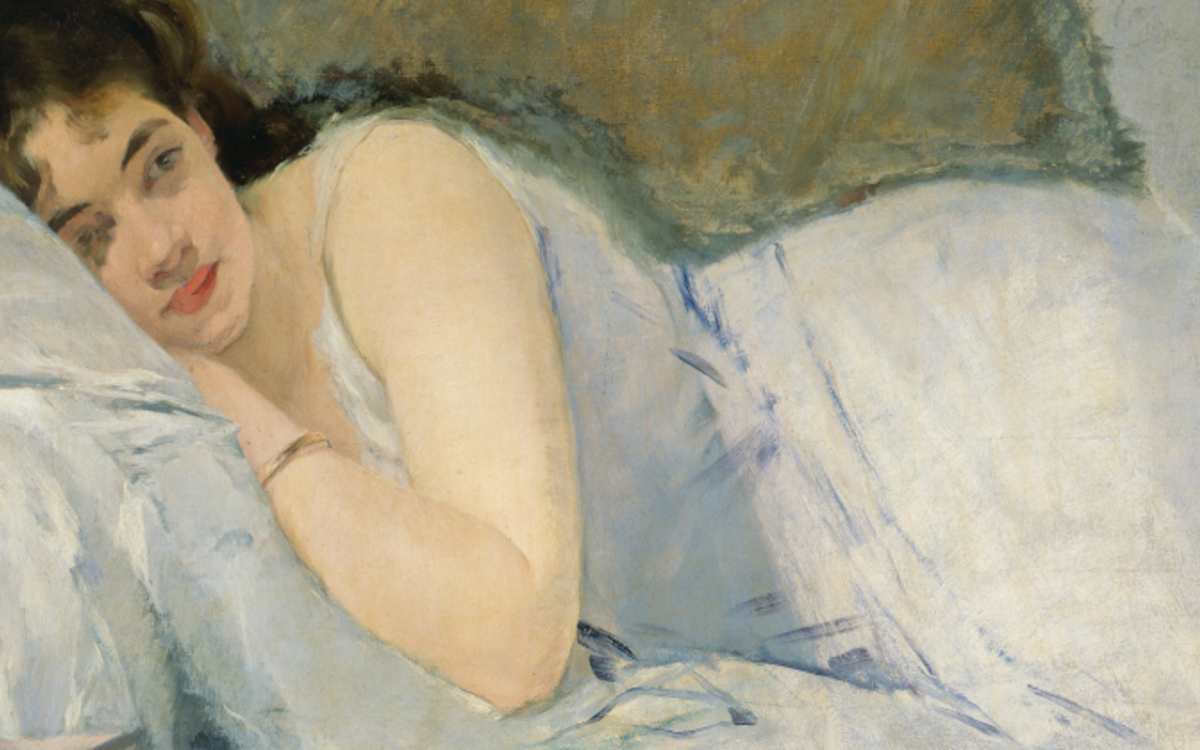
The Petit Palais presents an unprecedented monographic exhibition devoted to the painter Eva Gonzalès (1847-1883), before a stop at the Van Gogh Museum in Amsterdam in February 2027. A contemporary of Mary Cassatt and Berthe Morisot, with whom she is often associated, Eva Gonzalès has nevertheless never been the subject of a major retrospective, either in France or internationally. This artist of subtle sensitivity was the only student of Édouard Manet, with whom she maintained an exceptional artistic relationship. Supported by an attentive and cultivated family circle, she managed to assert her singular voice in a century that left little room for women artists. Bringing together nearly 100 works – paintings, pastels and engravings – the exhibition pays tribute to an artist of confirmed talent, who died prematurely at the age of 36. The chronological journey traces her trajectory and invites visitors to discover a determined personality, delving into the heart of her intimate world. Come from a cultivated bourgeois background, Eva Gonzalès benefited very early on from an environment conducive to the flourishing of her artistic vocation. Her father, Emmanuel Gonzalès, a recognized journalist and man of letters, moved at the heart of the Parisian artistic scene, while her mother, Céline Ragut, a musician, held a salon frequented by all of literary and fashionable Paris. Trained in the studio of Charles Chaplin, the young painter quickly broke free to assert a personal and sensitive style perceptible in works such as La Psyché (c. 1869-1870, National Gallery, Londres), La Fenêtre (c. 1865-1870, Denver Art Museum) or Le Moineau (c. 1865-1870, private collection). Her meeting with Édouard Manet in 1869 marked a decisive turning point in her career: she became his only student and one of his models, while determinedly pursuing an independent career. Eva Gonzalès exhibited regularly at the Salon between 1870 and 1883, without joining the Impressionist group. There she notably presented Une loge aux Italiens (1874, musée d'Orsay, Paris) or Le Clairon (1870, musée de Gajac, Villeneuve-sur-Lot), works in which the clear influence of Manet emerges, both in the choice of subjects and in the freedom of brushwork. The exhibition highlights a subtle and intimate body of work, attentive to female figures and everyday life. Interior scenes bathed in light, portraits imbued with grace and landscapes painted on the Normandy coast make up a pictorial universe of great refinement, as evidenced by Jeune fille au réveil (1877-1878, Kunsthalle, Brême) or Miss et bébé (1877-1878, National Gallery of Art, Washington). In 1879, Eva Gonzalès married the painter and engraver Henri Guérard. Their relationship, nourished by constant artistic exchanges, testifies to a genuine intellectual and emotional complicity. Her sister Jeanne, who was at once model, student and confidante, also occupied an essential place in her work. She is found there, depicted wearing Eva Gonzalès's wedding dress, in a troubling mise en abyme that fate would further accentuate: a few years after the artist's premature death, Jeanne would in turn marry Henri Guérard. In 1883, Eva Gonzalès's career came to an abrupt halt: she died a few days after the birth of her son, shortly after the death of Édouard Manet. Despite a favorable critical reception during her lifetime and a retrospective organized at the salons of La Vie moderne in Paris in 1885, her work gradually fell into oblivion. Long left in the shadow of the great narratives of modernity, Eva Gonzalès now appears as an essential figure in the painting of her time. This exhibition intends to restore her rightful place in art history and to reveal, through the singularity of her gaze, the brilliance of a body of work too long unrecognized. In counterpoint, works by Berthe Morisot, Mary Cassatt and Marie Bracquemond shed light on the intersecting trajectories of these artists and the conditions of their creation at the end of the 19th century.
Source: Paris Open Data ↗