Exposition immersive « Seokguram, un monde infini »
Centre Culturel Coréen
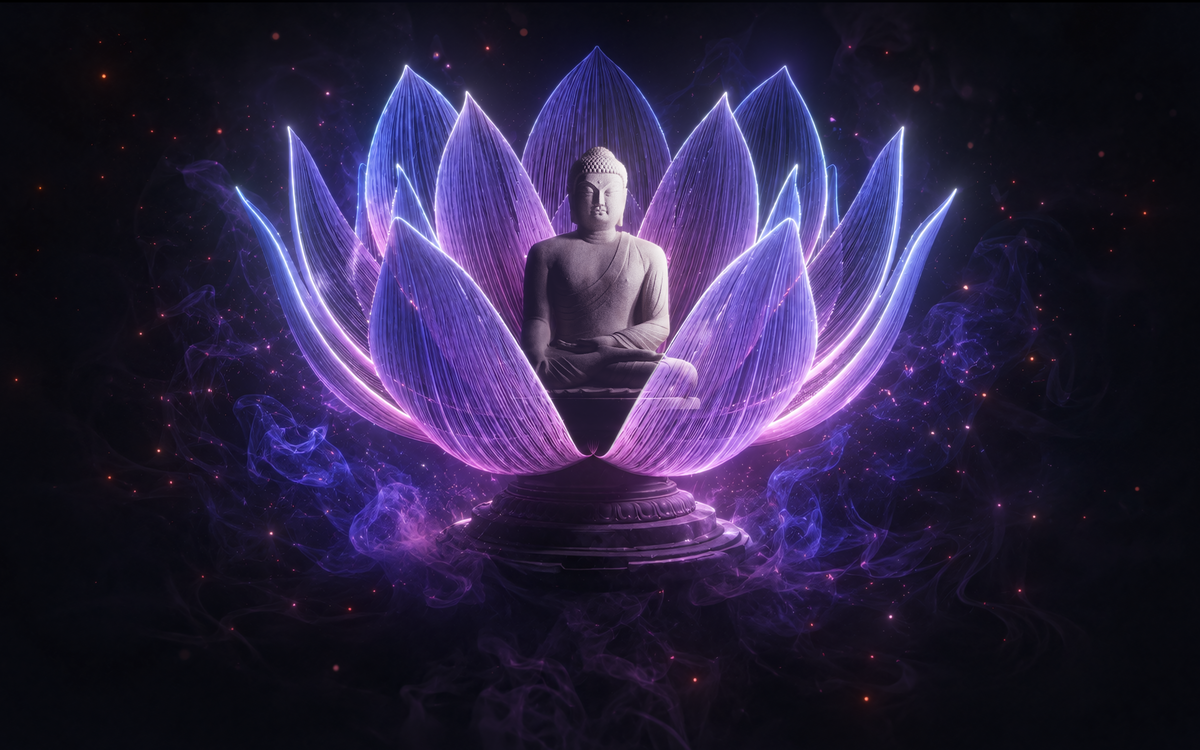
Built in the 8th century, the Seokguram grotto continues today to bear witness to the richness of Corée's heritage. This immersive exhibition was designed to offer the public in France a sensory discovery of this emblematic site. It also allows those who already know Seokguram to rediscover its atmosphere and revive their memories of it. Thanks to a hyperrealistic reconstruction, the installation first gives the impression of truly entering the grotto. The journey allows visitors to observe, one after another, the statues of the eight classes of protective deities, the four heavenly kings, and the Vajrapani guardians, before revealing the main Bouddha. This faithful representation then gradually gives way to a digital creation: the halo and lotus motifs adorning the vault light up, while lotus flowers appear around the Bouddha to form a representation of the Seokguram mandala. Between reconstruction and digital creation, the video thus offers a new perspective on the site, inviting visitors to discover it one day in Corée or to recall a past visit. In addition to the video, the exhibition offers an interactive installation entitled Lanterne à vœux : un souhait envoyé de tout son cœur. Visitors are invited to create their own virtual lantern, write a wish on it, and then watch it light up in real time on the digital wall of the exhibition space, extending the final sequence of the main video. Designed on the occasion of the 140th anniversary of diplomatic relations between Corée and France, this participatory installation extends the experience by inviting the public to take part in it directly. This immersive experience echoes the exhibition devoted to Seokguram, also presented at the Centre Culturel Coréen. Through works, objects, and digital installations, it allows for a deeper discovery of the site, its history, and the cultural heritage of Silla.
Source: Paris Open Data ↗