EXPOSITION LA MODE AU MOYEN AGE
Tour Jean sans Peur
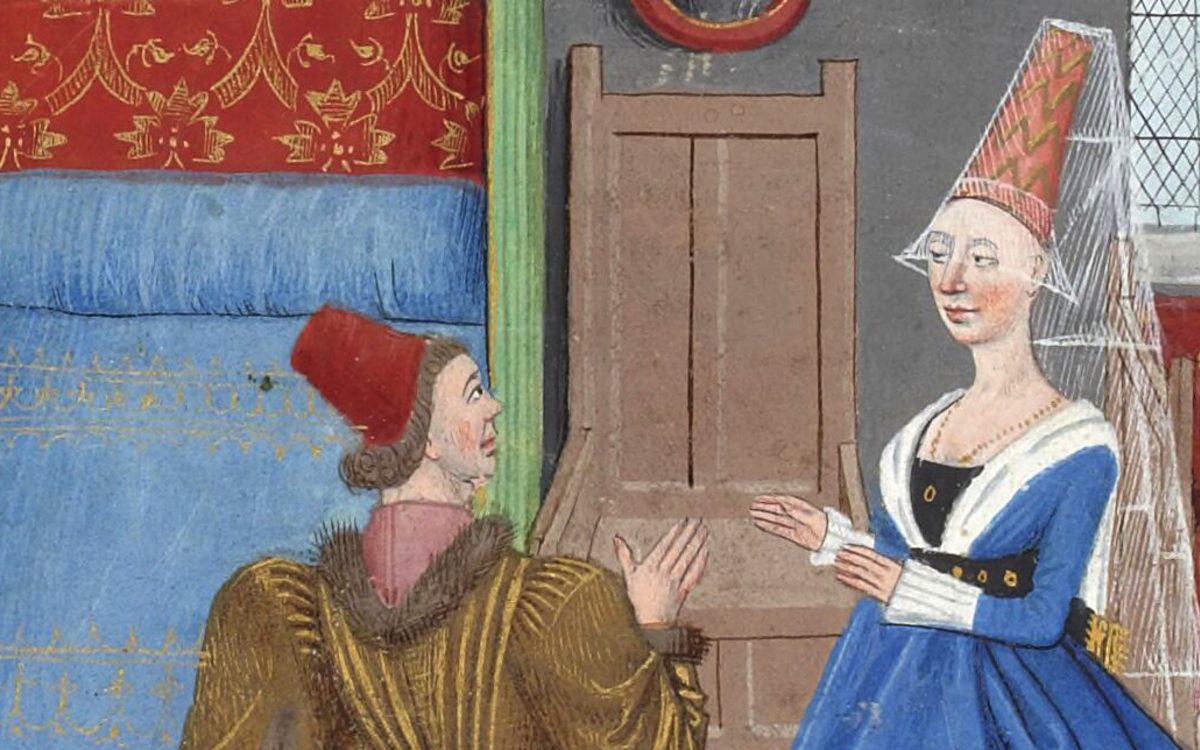
The exhibition La mode au Moyen Âge offers a journey into the medieval world of clothing, where tailors compete in ingenuity to enhance the silhouette and the wealth of the wearer. These are the early beginnings of fashion phenomena as we know them today! The exhibition plunges the visitor into the world of medieval fashion through three themes presenting the evolution of the silhouette, the importance of accessories, headwear, down to the refinement of footwear, and finally the social norms that govern clothing appearance in medieval society. A final section is devoted to the making and upkeep of garments. Around the exhibition: From May to December 2026, numerous events are offered around fashion and textiles in the Middle Ages: a lecture series, a medieval weekend in July, a mini-exhibition on tapestry in June and July in partnership with IESA, etc. Program to follow on www.tourjeansanspeur.com Programme ticketing: https://www.payasso.fr/tourjsp/programmation2026 Paraître___________________________________________________________ Up to the 13th century, garments were worn loose, sometimes with lacing allowing the torso to be outlined; but at the dawn of the 14th century a true revolution begins. Loose garments now give way to fitted attire, following the same aesthetic: a slim and slender body. That of women is emphasized by wearing a cotte cinched at the torso and fitted with a neckline, while the male body is enhanced by a fitted pourpoint and tall hose. Moralists very early condemned this brazen fashion, comparing the male silhouette to that of a greyhound. In the 15th century, the pourpoint, the main element of the male wardrobe, rises to mid-buttock. This evolution requires an adjustment of the hose, which end up joining together, completed by the codpiece, which appears at the same time! As a kind of bra, women bind their bust or else use "bodices with breast pouches" when the breasts are sagging or too full. Playing with clothing________________________________________________ Courts are the favored places of eccentricity. Reflecting this, aristocratic clothing includes numerous accessories and devices characteristic of the late Middle Ages: goldsmith-work belts with little bells, cutouts to adorn the collar of hoods, the hem of gowns, or the cuffs of sleeves, precious stones, furs, feathers, etc. Buttons or toggles and laces accentuate the slenderness of the silhouette, while fur-trimmed openings on the sides of houppelandes reveal the garment underneath. These slits also incidentally allow retrieving objects hung from the belt. Headwear follows these eccentricities. Fashionable men play with the many ways of wearing their hood, while fashionable women wear increasingly airy headdresses, comparable to the sails of a ship! Footwear, like clothing, becomes more refined, giving rise in the 15th century to the poulaine, and later to the bear's paw shoe. To stroll through the muddy streets, one could use pattens or "clogs," a kind of overshoe with a thick sole fitted with a strap. The habit makes the monk_________________________________________________ For moralists, clothing reflects the soul. Religious and secular authorities thus watch over the observance of social norms and limit excess. From the 13th century, sumptuary laws are enacted requiring everyone to dress in a manner reflecting their rank in society. In Italy, pyres are set up in public squares to urge the faithful to burn their extravagant finery. For prostitutes, veils or headwear are forbidden. In Bergamo, Italy, a red hood with bells stigmatizes pimps! Non-Christian communities must wear discriminating signs: for example, Jews wear a yellow skullcap in Marseille, Muslims a yellow cloth roundel in Spain. Distinctive signs appear among the aristocracy. Coats of arms, which appeared on battlefields as early as the 12th century, are embroidered on garments in the form of small escutcheons. These garments can also be personalized with the colors and arms of the prince. In the 14th century, mottos, the prince's personal emblems, spread and become true communication tools. Only disguises for the many festivities allow, for a time, an upheaval of values, perfectly represented by the fool, a professional entertainer in the service of kings and princes. Exhibition curator: Nadège Gauffre Fayolle, medievalist historian, independent researcher, specialist in matters of dress in the Middle Ages and member of AFET (Association Française pour l'Étude du Textile) With loans of clothing and accessory collections from the reenactment associations Mercurius and Artemis (Nicolas Baptiste and Soline Anthore Baptiste, respectively doctors in the history of armor and the history of clothing)
Source: Paris Open Data ↗