Exposition Paris à l’arraché. Jacques Villeglé et l’art urbain au Musée Carnavalet - Histoire de Paris
Musée Carnavalet - Histoire de Paris
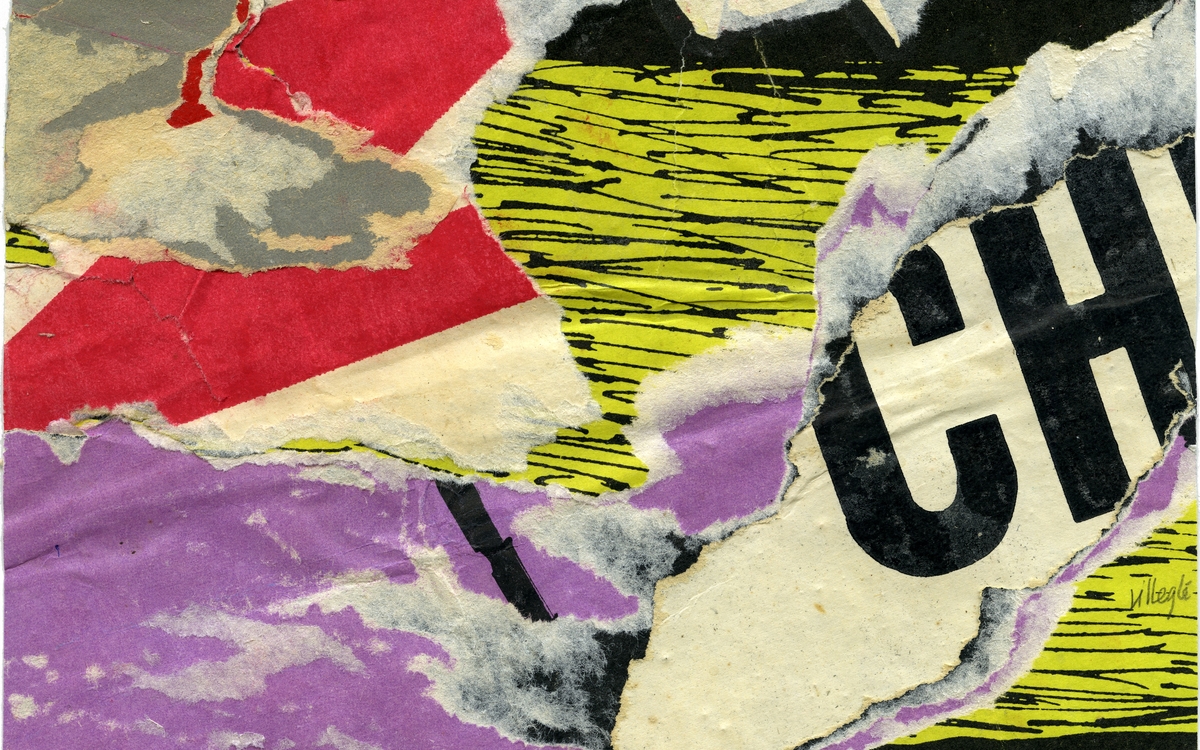
On the occasion of the centenary of the birth of Jacques Villeglé (27 March 1926, Quimper – 6 June 2022, Paris), the Musée Carnavalet – Histoire de Paris presents the exhibition "Paris à l'arraché. Jacques Villeglé et l'art urbain." A major artist of the French scene, Jacques Villeglé developed a singular approach characterized by the harvesting of posters from urban space. Through these fragments torn from the walls of Paris, he transforms the ephemeral traces of the city into a unique visual language, at once poetic and documentary. His prolific body of work invites us to discover the history of the city through lacerated posters or graphic signs that he recomposes. It also allows us to explore his connections with the many expressions of contemporary urban art. The exhibition is organized as a journey through groupings structured by the vision of Jacques Villeglé, gathered from his writings. His works are set in dialogue with photographs, sound archives, music, film excerpts, interviews, and testimonies, among which numerous previously unpublished documents. Jacques Villeglé, Seine/Jacob, September 1964. Lacerated posters mounted on canvas; Credits: Fonds de dotation Villeglé, Adagp, Paris, 2026. Photo DR The exhibition focuses on his practice at the crossroads of poetry and urban archaeology. For him, Paris is an open-air studio, where every wall holds a work in the making. Villeglé's wanderings invite us to cross four neighborhoods where he particularly gathered material, from the porte Maillot to Saint-Germain-des-Prés, passing through the Montparnasse district and finally the Marais. The exhibition also reveals the historical dimension of Villeglé's work, which captures true snapshots of urban space at a given time. These postings evoke the political context, the struggles and mobilizations, the elections, local or national: the streets of Paris reflect a society shaken by multiple upheavals. By harvesting these posters, which he dates and locates, Jacques Villeglé, who readily describes himself as a "historien releveur" (recording historian), gathers material that preserves the memory of history's convulsions and the world's upheavals. The last part of the exhibition explores Villeglé's connections with the contemporary urban art scene. He forged ties and collaborated with several urban artists, such as Lek & Sowat. Sometimes regarded as a tutelary figure, Jacques Villeglé tempers this view with amusement: where street artists add elements to the streets, he spent his life removing them. "I do exactly the opposite of street art artists. But since they work in the street, like me, we got along. I take the work in the street, ready-made, and bring it back to the studio, while they go into the street to add something." Jacques Villeglé continues to this day to inspire artists who make the street their gallery, several of whose projects are exhibited alongside his works.
Source: Paris Open Data ↗