Madeleine de Sinéty. Une vie
Jeu de Paume
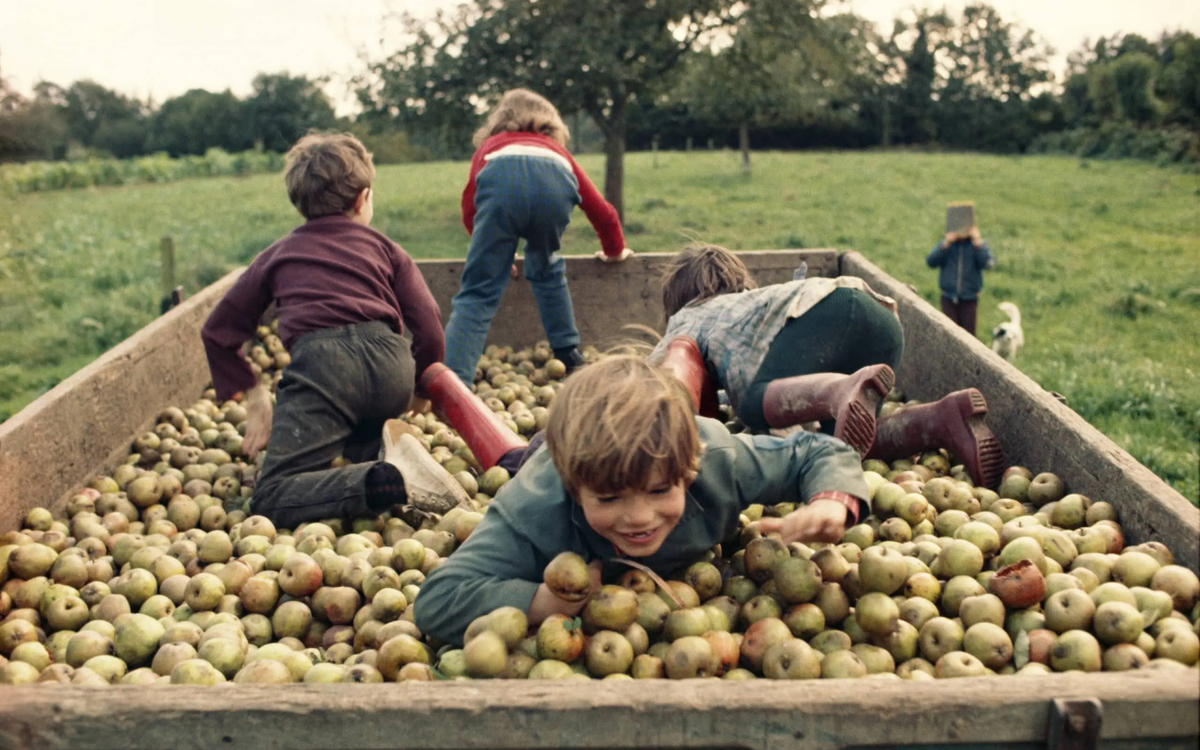
This exhibition, which highlights several series of previously unseen photographs, is the first retrospective devoted to Madeleine de Sinéty (1934-2011), whose work was rarely shown during her lifetime: only her black-and-white work had been partially unveiled, notably during an exhibition at the Bibliothèque nationale de France in 1996 and another in the United States, at the Portland Museum of Art in Maine in 2011. Her solitary body of work, built apart from commissions and publications, was intertwined with her daily life and her back-and-forth journeys between France and the United States. Born in a château in the Val de Loire that was destroyed by fire when she was fourteen, Madeleine de Sinéty began her artistic career in Paris in the mid-1960s as a fashion illustrator for magazines. The desire to create seems to have always driven her; she could have written or painted, but it was photography that combined the greatest number of her aspirations and won out. After studying at the École des arts décoratifs de Paris, she began photographing as a self-taught artist, in both color and black-and-white. Timidly at first, in 1970, with images of her neighborhood – that of the gare Montparnasse, then in the midst of transformation –, then in the streets of New York, where she stayed several times with her husband Daniel Behrman, an American journalist she met in Paris; and finally around steam trains, a childhood passion she thus extended through this medium. It was also there that she found another kind of distance with her subjects: she became friends with railway workers, made their portraits, shared their rest periods and discovered the realities of the working-class world. Madeleine de Sinéty's output is most often inseparable from her everyday life: in the small village of Poilley in Brittany – where she settled in the 1970s and took over 50,000 photographs over about ten years –, as well as in Rangeley in the United States, her place of residence for the last twenty-five years of her life. There, she photographed from within the communities that had adopted her – relatives, families, friends and acquaintances –, activities and events, as well as the rhythm of the seasons. With a constant concern for documenting and bearing witness, she captured customs, gestures, places, and practices – many of which were destined to disappear –, attempting, day after day and with a touch of nostalgia, to hold on to their fleeting grace and fragile colors. This thirst for memory and remembrance is also found in the diary she kept at various points in her life, excerpts of which are presented in the exhibition, as a counterpoint to her photographs.
Source: Paris Open Data ↗