Noa Eshkol, 1924-2007. Danse et compositions
Musée d'Art et d'Histoire du Judaïsme
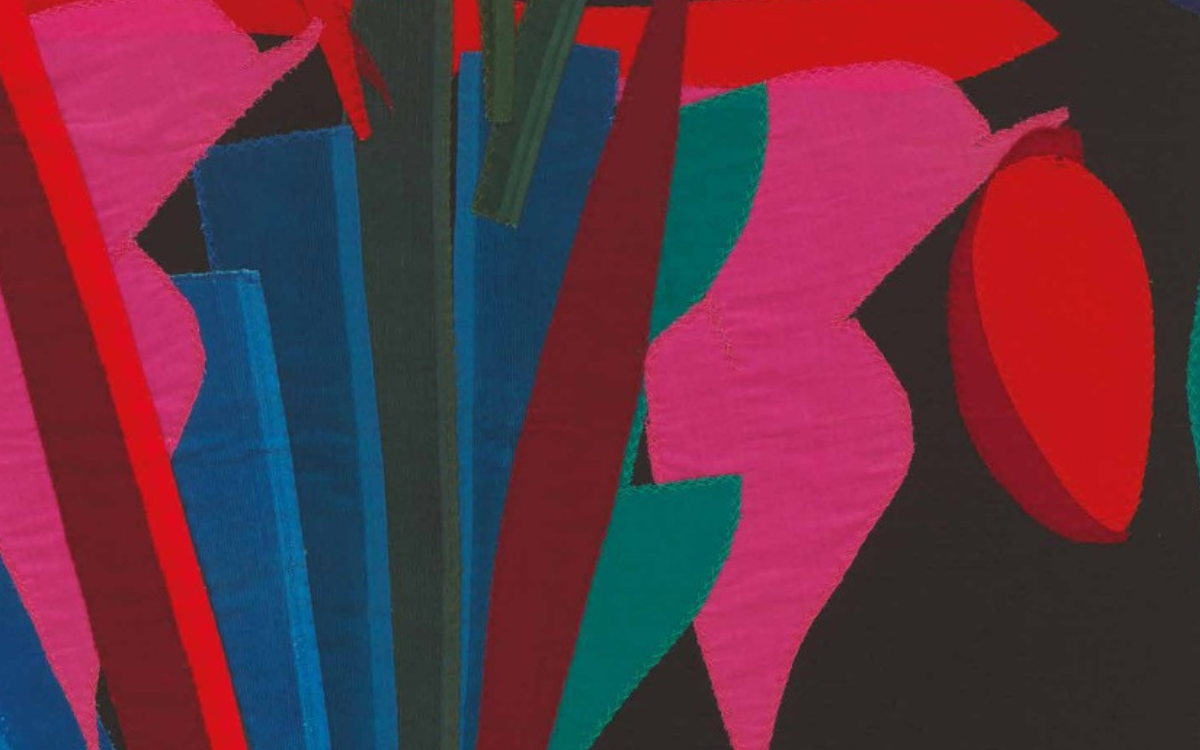
The mahJ presents the first exhibition in France devoted to the Israeli artist Noa Eshkol (Degania, 1924 – Holon, 2007). A pioneer of modern dance and choreographer, she was also a prodigious textile artist. The exhibition sheds light on her work from the 1950s to the 2000s, her Wall carpets, as well as her choreographic compositions through drawings, photographs and videos. Dancer, choreographer and artist, Noa Eshkol remains a central figure of modern dance in Israel. Known for her movement notation system, she created the Chamber Dance Group in 1951. Her choreographies are danced sequences whose great sobriety is matched only by their complexity. In the last thirty years of her life, dance was joined by the production of Wall Carpets, large textile compositions, "without rules", "without theory", "only passion" as she wrote. From one art to another, from choreographic creation to the composition of Wall carpets, from collective bodily expression to the singularity of a quasi-pictorial textile corpus, her work, still little known until recently, fascinates a new generation of artists. "Noa Eshkol, 1924-2007. Danse et compositions" is the first exhibition devoted to the artist in France. It traces the whole of her life and work, and also presents installations by the artists Yael Bartana and Sharon Lockhart. Born at kibboutz Degania Bet, founded in 1920, Noa Eshkol trained in Tel-Aviv at the school of the German choreographer Tile Rössler, a representative of expressionist dance. From the end of the Second World War, she continued her training with Rudolf Laban in Manchester. But the notation system developed by the Hungarian theorist was not enough for her, and she sought her own path. Back in Israel in 1951, she founded her company. To the sound of a metronome, lit by a neutral light, her dancers wore black costumes, according to a minimal setup designed to highlight the precision of the movement sequences. For nearly twenty years, movement notation was the meaning of her life. She taught, took part in research groups and composed. The Yom Kippur War, in October 1973, marked a break. Declaring "No time to dance", she abandoned dance to create with her troupe large textile works, made of scraps and salvaged clothing, sewn onto pieces of fabric using the appliqué technique. These compositions oscillate between abstraction, still life and landscape. This activity continued for nearly three decades and gave rise to nearly 1,800 works, making Noa Eshkol one of the most inventive and prolific textile artists of the 20th century.
Source: Paris Open Data ↗