Tenter l’art pour soigner - À l’hôpital psychiatrique de Blida-Joinville dans les années 1960
L'Institut du Monde Arabe
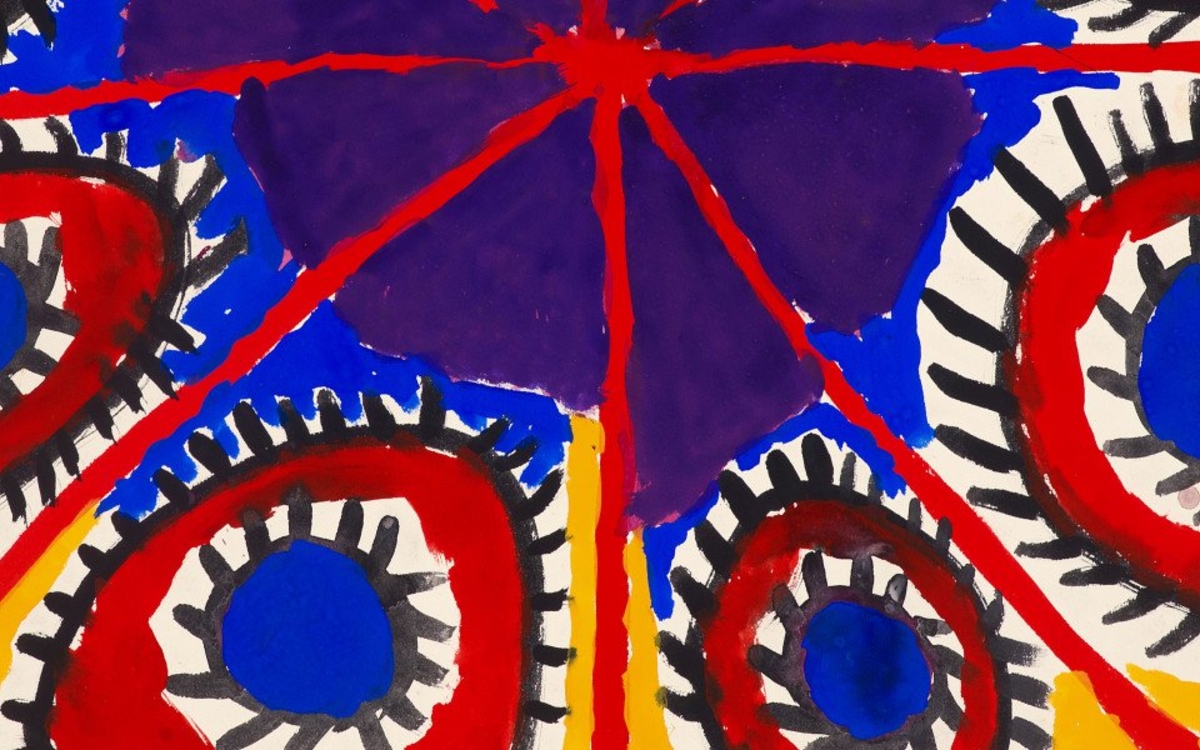
In 2021, the museum of the Institut du monde arabe received a generous donation: a collection of archives, painted ceramics, and numerous panels drawn in gouache, produced in the late 1960s during socialtherapy workshops held at the psychiatric hospital of Blida-Joinville (HPB), an Algerian institution marked by the emblematic figure of Frantz Fanon. Here is this donation brought to light within its historical context. The psychiatric hospital of Blida-Joinville (HPB) was founded in 1933. Frantz Fanon (1925-1961), doctor of psychiatry and a major figure of anticolonialism, served there as chief physician between 1953 and 1956; the hospital would bear his name upon the country's independence. Breaking with colonial psychiatry, Fanon renewed the psychiatric approach by adapting it to the local cultural and social context of the patients. Together with them and the medical team, he created a social fabric within the institution, including manual activities, music therapy, and sports practice, in order to foster patients' expression with a view to their possible recovery and reintegration into society. In the late 1960s, Fanon's successors developed this practice of social therapy. This is evidenced by the drawing workshops that gave rise to this very rich collection of gouache paintings. Drawing became a genuine medium of expression for the patients. The exhibition examines the content of these paintings by highlighting the human dimension of the patients who created them; and, drawing on the archives from the donation, sheds light on the historical context in which the contributions of the art workshops at the hospital took place.
Source: Paris Open Data ↗