Voir Tahiti. Premières photographies 1859-1870
Musée du quai Branly - Jacques Chirac
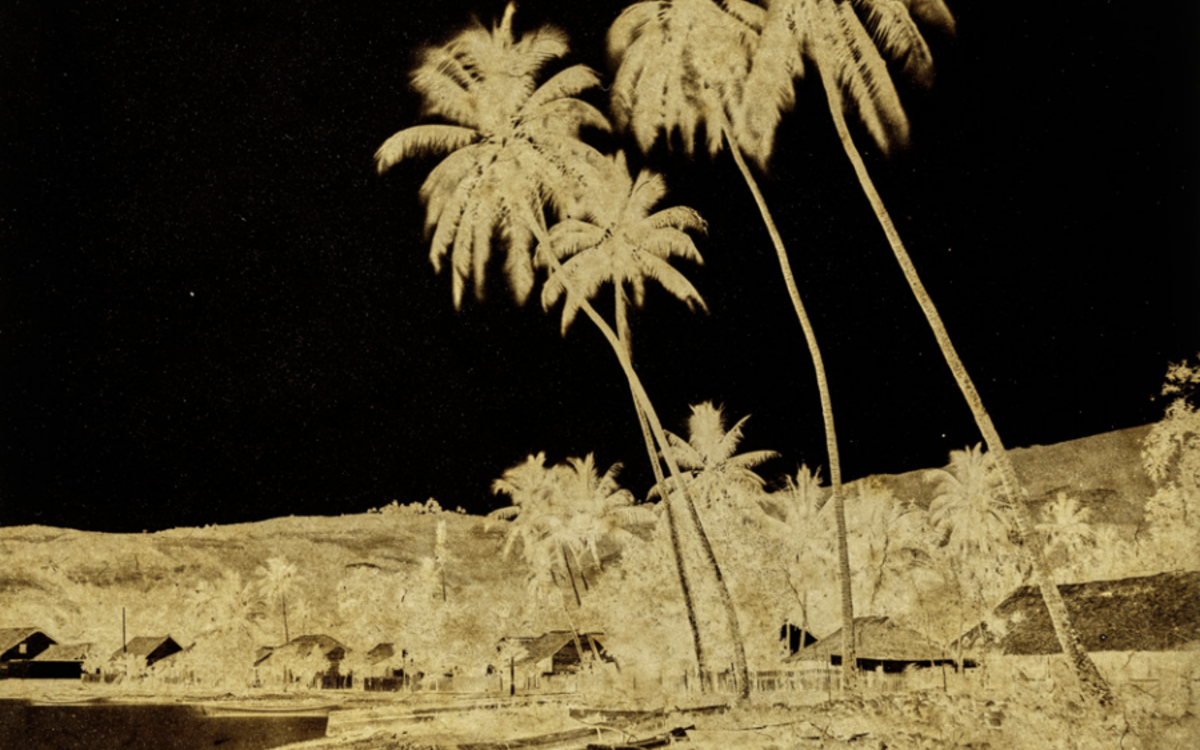
Two perspectives, a decade apart: the very first photographs of French Polynesia resurface, taken by an obscure naval surgeon and an already renowned photographer. An unprecedented photographic rediscovery at the museum In 2023, the museum acquired an exceptional collection of photographs, the earliest images made in French Polynesia between 1859 and 1870. They are the work of two naval officers, Gustave Viaud and Paul Émile Miot, whose complementary approaches offer a rare testimony of a territory still very little photographed at the time. Gustave Viaud's paper negatives, produced between 1859 and 1862, form an unpublished corpus, long kept within the Loti Viaud family and later by a private collector. As the elder brother of Pierre Loti, Viaud played a major role in the birth of the writer's taste for faraway places, but he was also a discreet pioneer of photography. Settled in Tahiti as a naval surgeon, he quickly experimented with this new medium. His images, ranging from masterful landscapes and familiar topographic scenes to the subtle effects of wind on vegetation, reveal a true sense of composition. In 1859, he also produced a remarkable portrait of Teriimaevarua II, queen of Bora Bora. Ten years later, Paul Émile Miot, an officer already recognized as an accomplished photographer, stayed in Tahiti and the Marquesas. Using the collodion glass negative process, he captured coastlines, landscapes, and faces of Polynesian society, notably the royal family. His precise, almost modern eye gives his compositions a singular power. Brought together, these two series form a striking visual body of work, predating the massive development of photography in these archipelagos. The exhibition aims to highlight the graphic beauty of the negatives, while presenting enlargements, positives, and vintage prints. Viaud's images, remaining almost entirely unpublished, and Miot's, never before shown in a dedicated exhibition, engage in dialogue for the first time within a single exhibition trail.
Source: Paris Open Data ↗