Andy Warhol. La ligne et l’image
Musée du Luxembourg
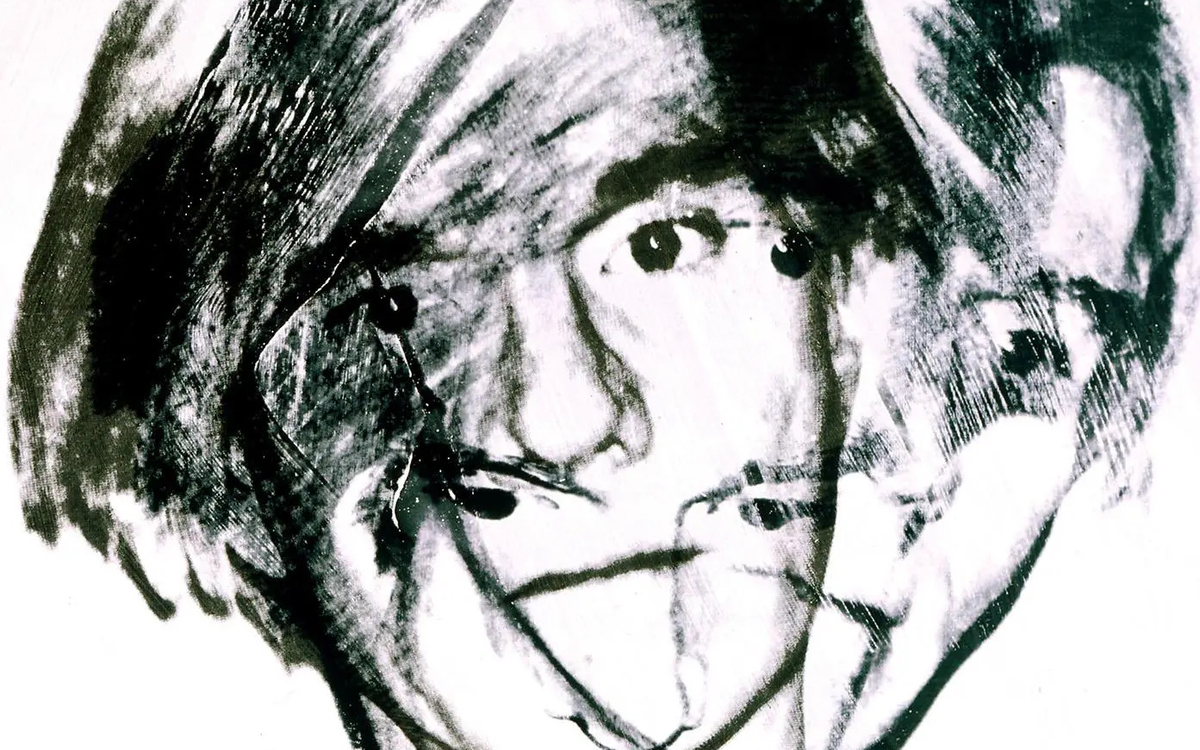
While the name Andy Warhol immediately evokes silkscreens and portraits of celebrities, his drawn work occupies an essential place in his artistic practice. The exhibition “Andy Warhol. La ligne et l’image” reveals how far from being incidental, this medium accompanies the whole of his career. Trained in illustration, the artist never stopped drawing, even after adopting the mechanical processes that marked his work. Drawing thus appears as a constant site of experimentation, where images are constructed and a singular visual thinking unfolds. From an early Autoportrait dated 1942 to the acrylic drawings for La Dernière Cène in 1986, Warhol's drawn production is abundant and varied. Portraits, caricatures, genre scenes, advertising illustrations, self-promotional portfolios: drawing remained his tool of choice until the end of the 1950s. It allowed him to gradually free himself from the influences of Klee, Picasso, Cocteau, as well as American artists such as Shahn. Through drawing, Andrew Warhola became Andy Warhol. After a period dominated by painting and then film between 1963 and 1973, he returned to drawing with new objectives linked to his pictorial production, notably to commissioned portraits, of which that of Mao constitutes a major example. Drawing then became a space of experimentation: it allowed him to work through chromatic, graphic and conceptual choices, often at a scale close to that of the paintings. The exhibition is structured around five thematic sections: his beginnings as an advertising illustrator, the importance of handwriting, his fascination with faces and masks, a gay iconography that long remained confidential, and reflections on death, which became an obsession after the 1968 attack that nearly cost him his life. The exhibition brings together around 150 drawings, as well as paintings, silkscreens on paper, photographs and archival documents. It highlights the artist's technical inventiveness and the processes he developed (stamps, transferred lines, stencils, collages), conceived for the reproduction and repetition of images. Rare or neglected drawings and documents provide access to the making of the work and allow entry into the heart of the artist's New York studio, The Factory. So many avenues that invite us to reconsider the whole of Warhol's work through this dialogue between gesture and reproduction, between hand and machine.
Source: Paris Open Data ↗