Exposition : France, Suède et Empire ottoman : alliances artistiques
Institut Suédois
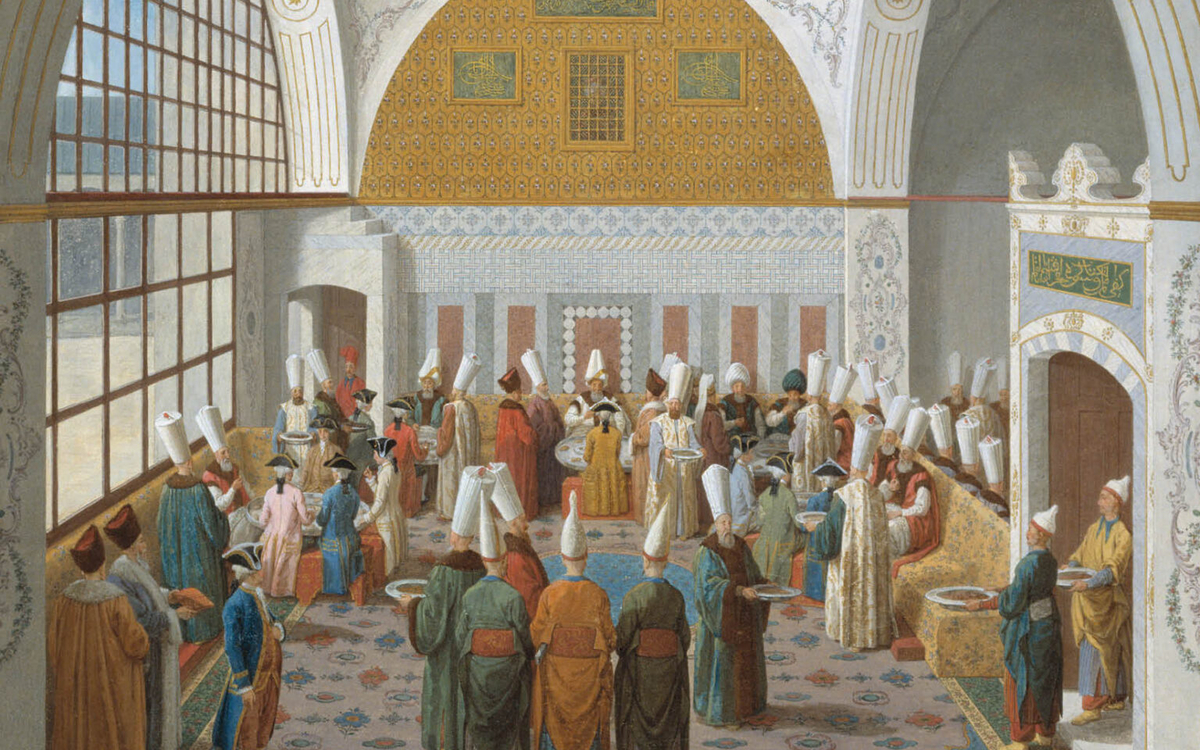
At the beginning of the 18th century, France, Sweden and the Ottoman Empire formed a network of alliances in which diplomacy paved the way for the imagination. Through paintings, drawings, prints and watercolours, the exhibition explores these artistic and cultural circulations. In the 18th century, relations between the West and the East eased after long centuries marked by armed conflicts. France, Sweden and the Ottoman Empire allied against common enemies, namely Russia and Austria. Diplomatic exchanges became structured, permanent embassies were established, and travel became more accessible. In this new context, a mutual curiosity developed: Europeans and Ottomans observed and influenced each other. Western artists and intellectuals became fascinated by Ottoman costumes and interiors, constructing the image of an idealized world. The figure of the sultan and court life inspired literature, the visual arts and the performing arts, while also sparking discussions imbued with the spirit of the Enlightenment. The exhibition presents a selection of works from the collections of the Institut suédois and the Nationalmuseum, Stockholm, illustrating these circulations. The chronological journey opens with two paintings made by a Swedish painter based on the works of Jean-Baptiste Vanmour, who accompanied the French ambassador on a voyage to Constantinople (present-day Istanbul) in 1699. His views of the city, ceremonies and local population in traditional dress were disseminated throughout Europe as engravings in the Recueil de cent estampes représentant différentes nations du Levant (1714), profoundly shaping the Western imagination. The exhibition also includes several drawings by Cornelius Loos, an officer who took part in an expedition ordered by King Charles XII of Sweden, exiled in the Ottoman Empire after being defeated by Russia. Confined to his camp, the king decided to send his men into the Muslim world to document it. Loos's drawings offer a remarkable view of the architecture and landscapes of Constantinople, from urban panoramas to mosques, palaces and interior views of the Hagia Sophia basilica. The exhibition also addresses the role of merchants and interpreters in cultural exchanges. Asmund Palm, director of the Compagnie suédoise du Levant (Levantiska kompaniet), created to promote trade with France and the Ottoman Empire, commissioned portraits of himself and his daughter in Ottoman costumes. Ignatius Mouradgea d'Ohsson, a Franco-Armenian interpreter attached to the Swedish embassy, published in the 1780s the Tableau général de l'Empire ottoman, presenting a scholarly and documented approach to Islam and Ottoman laws and institutions. Original watercolours created for this work are shown in the exhibition, depicting scenes and interiors of official life in Istanbul. Beyond present-day Turkey and Greece, the vast Ottoman Empire encompassed, in the 18th century, a large part of the Balkan peninsula, the Middle East and North Africa. Islam was the dominant religion, but other beliefs were tolerated. Constantinople (which would become Istanbul in the 20th century) was the capital, and the city where the sultan resided. Curator: Martin Olin, director of collections at the Nationalmuseum. Exhibition in collaboration with the Nationalmuseum, Stockholm, which manages the collection and permanent exhibition of the Institut suédois. Thank you to the Björn and Inger Savén foundation. Practical informationFree admission, no reservation required
Source: Paris Open Data ↗