Exposition « La grotte de Seokguram : le Secret millénaire de l’art bouddhique »
Centre Culturel Coréen
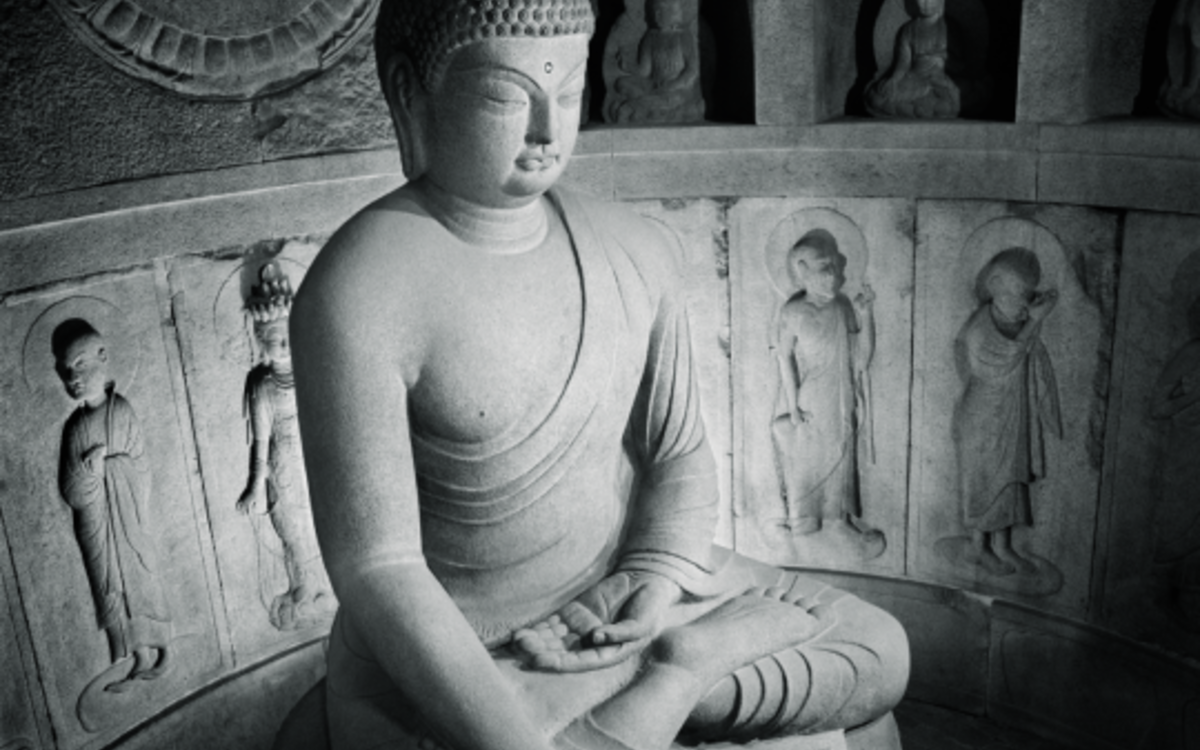
On the occasion of the 140th anniversary of diplomatic relations between Korea and France, the Centre Culturel Coréen, the city of Gyeongju and the Institut National de Recherche sur le Patrimoine Culturel de Corée present an exhibition devoted to the Seokguram grotto, inscribed on the UNESCO World Heritage list and located in Gyeongju, former capital of the Silla kingdom. Through this emblematic site, the exhibition invites the public to discover the Buddhist art that flourished during this period. Located in the southeast of the Korean peninsula, Gyeongju was for nearly a thousand years the capital of the Silla kingdom (57 BC – 935 AD). It is home to numerous archaeological sites and remains bearing witness to the cultural richness and traditions of this period. Seokguram, located on Mount Toham in Gyeongju, is an artificial grotto built from finely cut granite blocks assembled with remarkable precision. A true masterpiece of Buddhist art from the Unified Silla kingdom (668-935), it bears witness to the artistic refinement, architectural mastery and openness to the world that characterized this period. In 1995, Seokguram was inscribed on the UNESCO World Heritage list, in recognition of its exceptional heritage value. This exhibition was designed to offer visitors a more immersive discovery of Seokguram, a true jewel of Silla culture and a reflection of the Buddhist universe. It presents the original architecture and the remarkable construction techniques of the monument. Thanks to the photographs taken by Han Seokhong, who devoted his life to immortalizing Korean cultural heritage, visitors will also be able to appreciate the beauty of the sculptures that make up the grotto. Among them, the statues of monks, bodhisattvas and buddhas bear witness to the sacred dimension of religious art. The exhibition also offers an immersive and sensory experience thanks to various digital and educational devices. An LED screen allows visitors to discover the main historical sites of Gyeongju, including Bulguksa temple and the Seokguram grotto, while braille supports and tactile devices invite visitors to grasp the works through touch. These different approaches thus offer a discovery of Korean cultural heritage that is both concrete and accessible. The exhibition also highlights the Buddhist culture of the Silla kingdom through the presentation of emblematic sites and objects. Seokguram embodies the ideal vision of the Buddhist world to which the Unified Silla kingdom aspired; the glazed wall bricks adorned with guardian motifs from the Sacheonwangsa site evoke the protection of the Buddhist Law; the pond and the lotuses, which connect the world of Buddha to the earthly world; as well as the Sūtra de la Grande Dharani de la Lumière pure et immaculée, which represents the realization of the world of Buddha through sacred writings. Finally, the exhibition proposes to connect past and present through installations and works by contemporary artists who reinterpret Silla Buddhist culture and aesthetics. With Yeonji, Kim Eun-ha gives new life to pottery, fragments of tiles discovered in temples and recycled fibers, brought together in a poetic creation. Lee Seung-chul revisits traditional Buddhist sculpture through reproductions in hanji paper, while Sohn Dae Hyun highlights the richness of Korean craftsmanship with Buddha sculptures made using different techniques, including lacquer, ivory, mother-of-pearl and gilding. Finally, Studio Shinyoo offers a contemporary reinterpretation of the Buddhist pagoda, symbol of the Buddha's relics, the practice of Dharma and the wishes formulated by the faithful. Combined with objects dating from the Silla period, this installation invites visitors to linger around the works, to formulate their own wishes and to meditate. Starting November 23, a new immersive exhibition will complement the discovery of Seokguram. Thanks to a hyperrealistic reconstruction and a mapping projection on four canvases, the public will be able to virtually explore the grotto and discover this emblematic site from a new perspective. Information at coree-culture.org
Source: Paris Open Data ↗