Georges Perec, modes d'emploi
Bibliothèque François-Mitterrand – Galerie 2
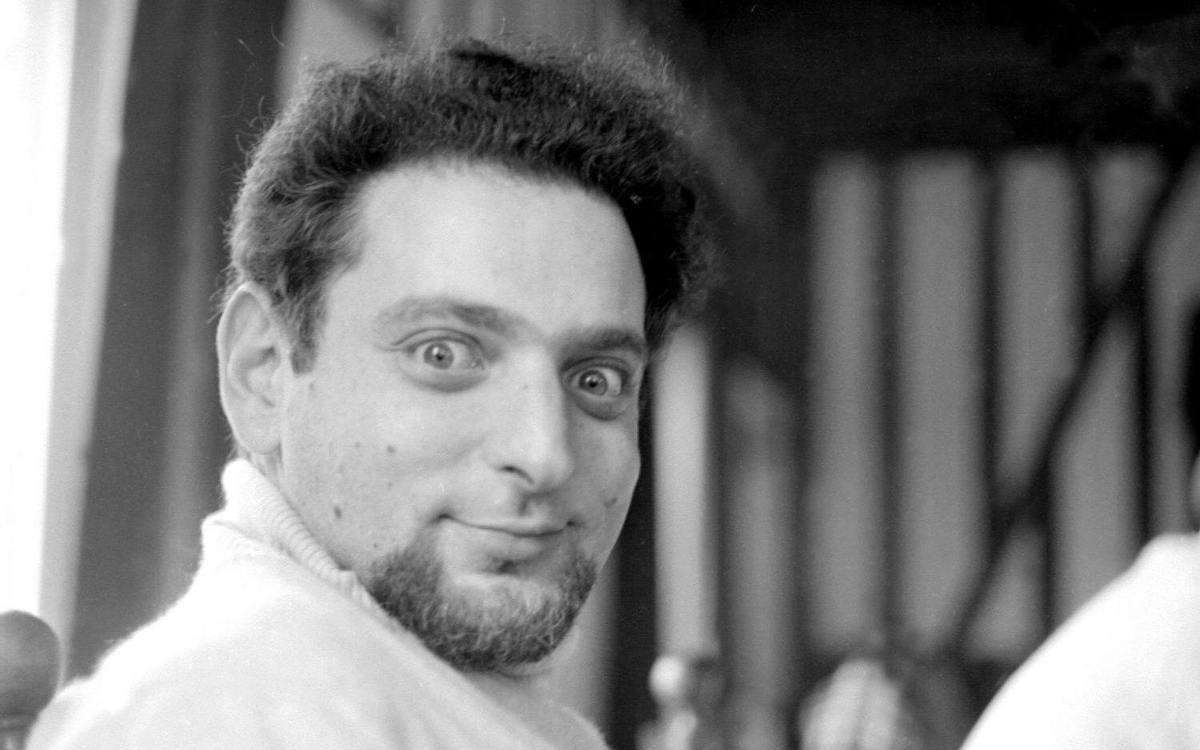
The BnF is devoting a major exhibition of nearly 300 pieces to the writer Georges Perec (1936-1982), a major figure of 20th-century French literature and an emblematic member of the Oulipo. The author notably of Les Choses, La Disparition and La Vie mode d'emploi, translated into numerous languages, Perec remains a reference writer whose work continues to inspire many creators. The exhibition in briefConceived as a « modes d'emploi » exhibition, this presentation brings together nearly 300 pieces and invites visitors to discover or gain a deeper knowledge of a polymorphous body of work. Manuscripts, photographs, paintings, drawings and objects held at the Bibliothèque nationale de France, at its Arsenal site (Paris IVe), thus question the « mythe Perec », while revealing, as a mirror to his writings, the man behind the work. Une vie mode d'emploiGeorges Perec's life began dramatically: his father died in 1940 during the first battles of the Second World War, his mother was deported and murdered at Auschwitz in 1943, and he himself spent the Occupation as a « hidden child » in the Vercors. After difficult beginnings, literary success came in 1965 with Les Choses, faded somewhat, then resurfaced in 1978 thanks to the success of La Vie mode d'emploi. After Perec's sudden death at 46, his work never ceased to gain importance and recognition, culminating in its entry into the prestigious Bibliothèque de la Pléiade in 2017. Des voyelles et une absente, parcours dans l'œuvre et la vie de PerecPlayful and interactive, the exhibition's itinerary unfolds across six spaces conceived as the vowels of the alphabet. Through these stages, it reveals a body of work whose discovery also uncovers the man hidden behind the texts. Notes, manuscripts, typescripts and publications engage in dialogue with photographs, drawings, paintings and objects (a bicycle, a typewriter) to weave with the visitor a relationship in which the notion of play, so present in Perec and his Oulipian friends, occupies a central place. Espace A: the first space presents the great diversity of a protean body of work, particularly perceptible in the youthful attempts and early publications, such as Les Choses (prix Renaudot 1965), and Un homme qui dort, which the writer adapted for cinema in 1974. Espace [E]: a reference to one of his most famous works, La Disparition, in which the letter E never appears, this mystery space evokes absence and composes, in negative space, the portrait of the one the exhibition invokes. Espace I: this space shows the liberating use of constraint in the construction and writing of novels (La Disparition) as well as poems (Alphabets), nourished by his companionship with the Oulipo (Ouvroir de littérature potentielle), a literary research group founded in 1960 by Raymond Queneau and François Le Lionnais. Espace O: this section focuses on the attention paid to common and ordinary things, which make up everyday scenery and define a generation as much as an individual. Je me souviens and Espèces d'espaces are evoked here, today carried forward by numerous creators and which also invite their readers to continue the gesture. Espace U: when his desire for totality relies on constraints to rehabilitate realism and epic ambition, Perec builds La Vie mode d'emploi (prix Médicis 1978), his masterpiece, whose stages of creation are presented through preparatory manuscripts. Espace Y: the exhibition's final section testifies to a faith in literature as remedy, as salvific quest and vital affirmation, beyond the traumas of a stolen childhood (W ou le souvenir d'enfance) or the questioning of exile (Récits d'Ellis Island). Une source d'inspiration pour les créateurs de tous horizonsThe numerous resonances of Perec's work among contemporary artists are evoked through the presentation of several visual or graphic works by Christian Boltanski, Sophie Calle, Sam Szafran, On Kawara or Roman Opalka; models by Clarence Stiernet, embroideries by the Perecofil group, drawings by Brecht Evens or Étienne Lécroart… The exhibition also offers the chance to discover the little-known, if not previously unseen, talent of Georges Perec as a draughtsman and painter. Finally, a selection of film excerpts recalls his participation in several cinematic productions. Le vrai du faux à la bibliothèque de l'ArsenalIn parallel, an annex to the exhibition devoted to Perec, Le vrai du faux, is presented free of charge at the bibliothèque de l'Arsenal, a BnF site where the writer's archives have been held since 1984. This proposal invites visitors to impertinently question the figure of the forger, often a driving force in Perec's work, as well as his trompe-l'œil games.
Source: Paris Open Data ↗