Jenny Holzer. J’ai vu
Musée d'Orsay
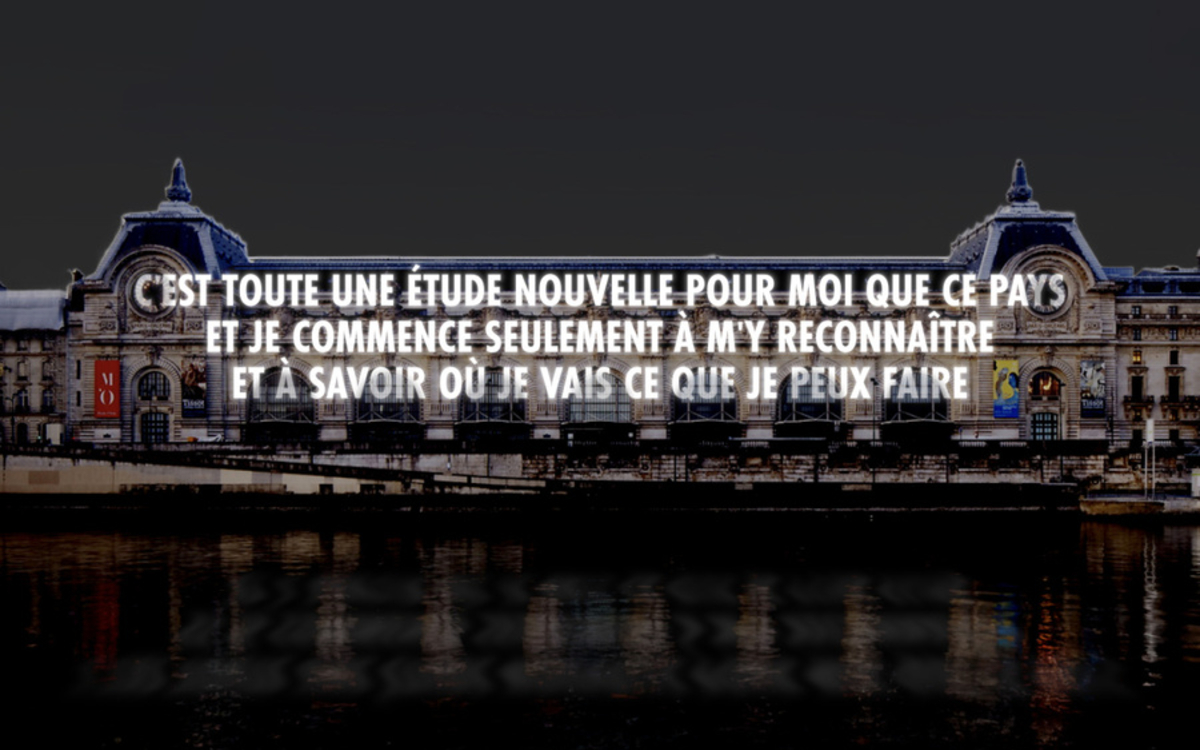
Recognized as one of the leading artists of our time, the American artist Jenny Holzer has placed words and ideas at the heart of her deeply engaged practice. For the exhibition J'ai vu, conceived with and for the musée d'Orsay in autumn 2026, the artist draws on fragments of texts taken from the musée d'Orsay's collections or important texts of the period, which she deploys across her preferred media: monumental installation, projection onto the historic façade of the station, engravings on exotic stones, and illuminated electronic displays. The exhibition will take various forms, beginning with light projections on the museum's façade, on the Seine side, during the inauguration week in October. The excerpts chosen by Holzer – ranging from artists' letters preserved in the museum's archives to literary or political writings contemporary to the period – will transform the exterior of the building and offer passersby an immersive, almost timeless experience. Inside, an LED installation designed specifically for the site, animated with colored streams of text, will allow visitors to immerse themselves in content drawn from the history represented in the museum's collections and in dialogue with it. This luminous work echoes the building's transformation from a 19th-century train station into a modern museum: a bespoke program, moving through the space, reflects the lively circulation of visitors and recalls the original function of the Gare d'Orsay. Running through a selection of works from the collections displayed in the domed rooms devoted to history painting, naturalism, and symbolism, the LED installation will engage in dialogue with Holzer's paintings made using gold, platinum, and palladium leaf. These paintings, in which erasure and concealment become visible, change over the course of the day according to variations in the light off the Seine. Much of their content remains hidden, but traces of difficult and essential decisions persist, echoing the history paintings displayed in the neighboring galleries. The exhibition will also present stone benches designed in dialogue with the museum's architecture and its permanent collections. Created especially for the occasion, these new sculptures, many of which are engraved with texts from the 1848–1914 period represented at the musée d'Orsay, will be placed in various spaces on the ground floor and in the galleries. The unusual hues of these benches respond to the remarkable diversity of stones used in the museum's sculptures and plinths, in keeping with Gae Aulenti's original design. Together, the works presented inside and outside the museum bear witness to the inseparable intertwining of past and present, and to the enduring bond that unites France and the United States. Outdoor light projections over several evenings around the October 2026 opening (dates to be announced).
Source: Paris Open Data ↗