L'étoffe de l'artiste. De Rosa Bonheur à Sonia Delaunay
Musée Bourdelle
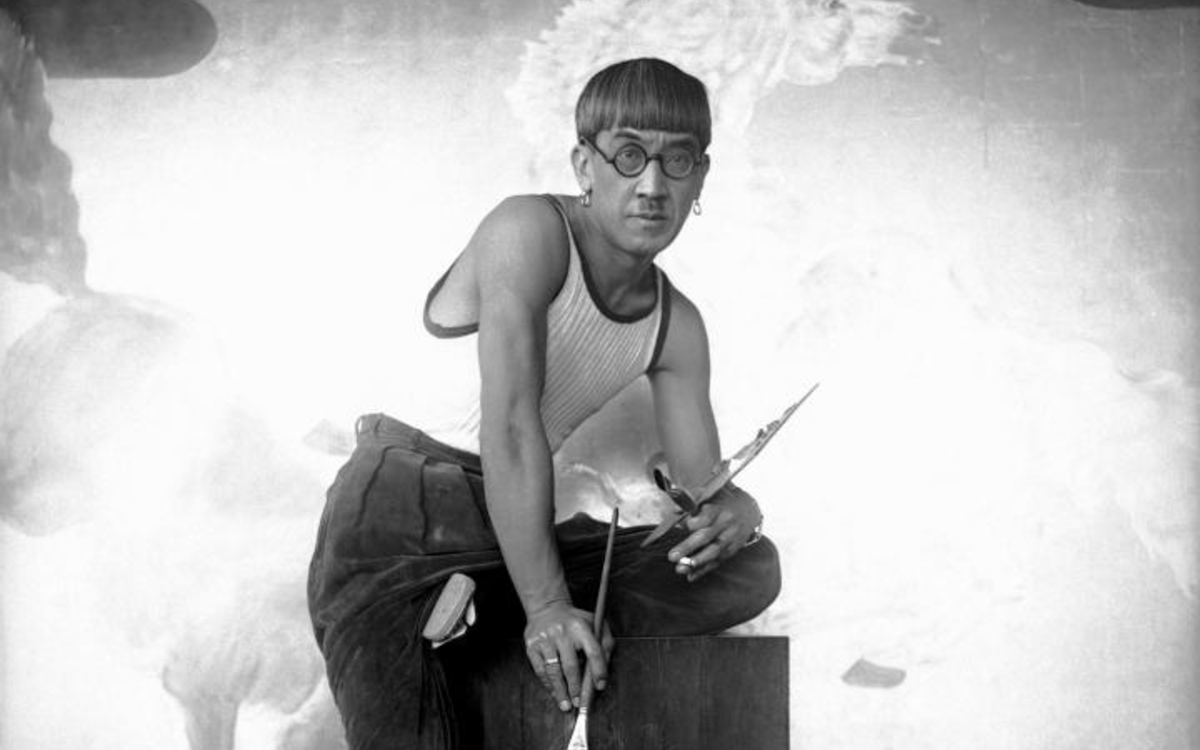
Following the rediscovery of Antoine Bourdelle's clothing in 2020, the musée Bourdelle explores, in a new exhibition, artists' representations and staging strategies through their clothes, from the end of the 19th century to the middle of the 20th century. The itinerary of "L'étoffe de l'artiste" is punctuated by little-known garments worn by emblematic or more obscure figures, both men and women – notably Gustav Klimt, Rosa Bonheur, Foujita, Sonia Delaunay, Camille Bernier –, in dialogue with paintings, sculptures, graphic arts and photographs. At the end of the 19th century, while many artists wore common city clothes, some asserted themselves through more elegant attire, while others appeared in smocks, overalls or coveralls, embodying a new ideal of the working artist. Dress codes soon multiplied, favoured by a movement towards singularisation. At the turn of the 20th century, the wardrobe alternately became a revolutionary manifesto, the extension of the creative act, or even the affirmation of an identity: gender fluidity and games of cross-dressing, the quest for real or dreamed-of elsewheres, affiliations or marginalities... Artists carefully composed an outfit, tracing recognisable silhouettes for posterity. While the relationship between artists and clothing has already been explored (notably in the exhibition S'habiller en artiste. L'artiste et le vêtement at the Louvre-Lens in 2025), L'étoffe de l'artiste adopts an innovative approach, at the crossroads of art history, sociology and fashion history. For the first time, more than 50 textile pieces, accessories and objects worn by the artists have been brought together, thanks to lengthy research work carried out by the curators in the collections and archives of institutions and private collections. These unique pieces are set alongside 50 photographs, 33 paintings, 12 drawings and 9 sculptures in a chrono-thematic itinerary, to capture the styles, looks and stagings that immediately identify them as artists. Particular attention was paid to the diversity of the artists represented, with nearly a quarter of the exhibited artists being women. The fruit of five years of work and research, L'étoffe de l'artiste benefits from exceptional loans from major French and European institutions such as the musée d'Orsay, the musée des Arts décoratifs de Paris, the musée d'Art moderne de Paris, the Palais Galliera, the Maison-atelier Foujita, the Museo di arte moderna e contemporanea di Trento e Rovereto (Italy), the Wien Museum (Austria) and the Städel Museum in Frankfurt am Main (Germany). Numerous loans also come from private collections.
Source: Paris Open Data ↗