Marilyn. Portrait d’une enfant radieuse
Galerie de l'Instant
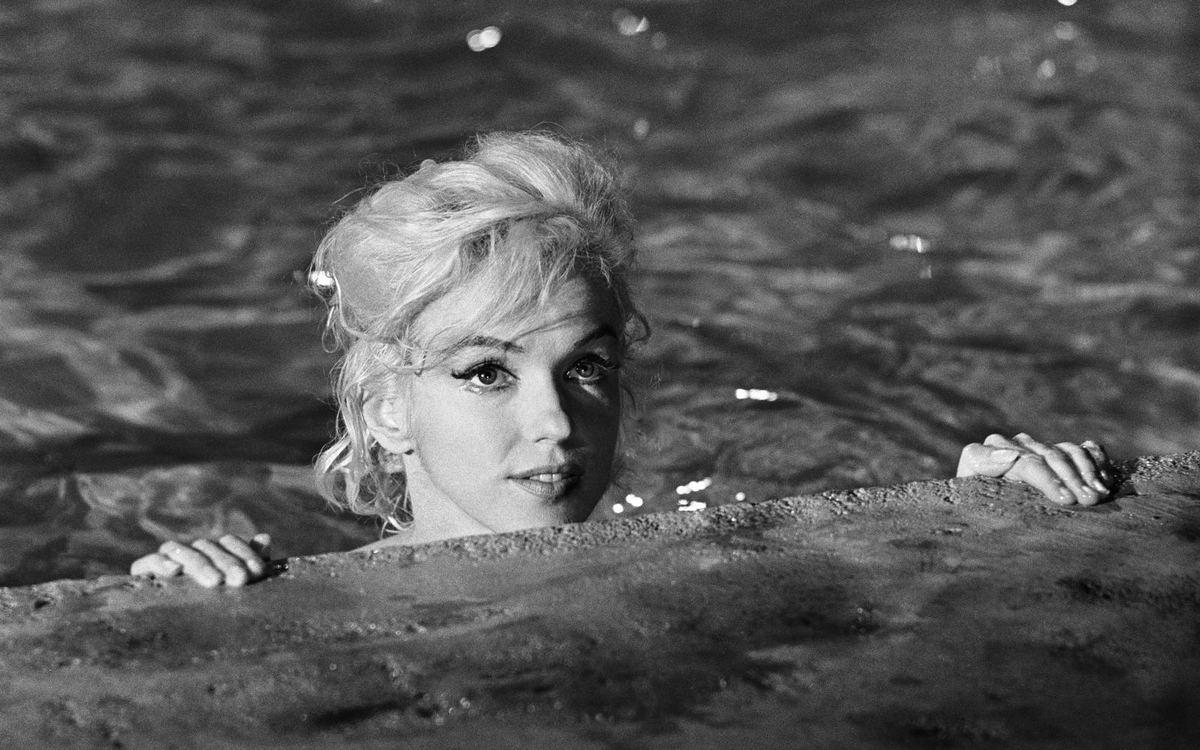
The white corolla of Marilyn's skirt lifted by the draft from the subway grate, at the corner of 52e Rue and de la 5e Avenue... Invited by Billy Wilder on the set of Sept ans de réflexion in 1954, Sam Shaw gets as close as possible to what is unfolding. As close as possible to the flesh, bathed in a clarity as radiant as that of stars whose scintillation continues to reach us, even though they have long since died out. What can be said about Marilyn Monroe that hasn't already been written, told, rehashed? Too many words, too many clichés, prints reproduced endlessly, commented on ad nauseam. The most exposed platinum blonde in the world. And yet in the portraits that the New York photographer took of the actress between 1954 and 1958, something of the mystery is conveyed to us. Of the intensity of a life. Of her beauty. And of her vulnerability. Their first meeting dates back to the filming of Viva Zapata!, at the moment when Sam Shaw began working for various studios in the film industry. They became friends. In some respects, they were comrades in arms. In the arena of cinema – "Everyone says I can't act." – the photographer undeniably contributes to Marilyn's performance. She feels at ease under Shaw's gaze. Wholly absorbed in the fervor of her budding love with the writer Arthur Miller, her third husband, she no longer wears her heart on her sleeve. The photographs gathered within these pages are so many solar images: Marilyn in the studio in the title role of Marilyn – ruby red lips, cotton-candy curls blonder than blonde... Of all the shots gathered in this small anthology, those taken at Roxbury, Miller's property in Connecticut, are unforgettable. Nothing spectacular, in fact. Moments of happy intimacy. But Shaw's gaze has never been so tactile, making us feel the creamy pallor of that fresh-milk skin, penetrating the halo of softness and abandon of that face left entirely to itself. On the back of one of the prints where the couple leans against a tree, Marilyn had written: "Movies are my business, but Arthur is my life" – Perhaps. The border is fluid, porous for one who exposes herself, to the point of vertigo, to the art of doubling. The images of Marilyn at her dressing table, absorbed in the ritual ceremony of makeup, offer a disturbing mise en abyme in which both the distance and the closeness between her and the Other are revealed. Norma Jean knew better than anyone how to capture, on the surface of the mirror, the dazzling reflection of Marilyn Monroe. To make emerge, to liberate the exquisite and unstable Presence, to study its expressions, to adopt its poses. To tame it to the point of holding the game with irresistible grace. Sam Shaw's photographs partake of this power of incantation. Poets have the gift of double vision. Truman Capote, in the incisive and dazzling portrait he draws of the actress, likens Marilyn's radiance to "a hummingbird in flight" – a poetry that only a camera or the watchful eye of the photographer would be capable of capturing... But this volatile luminosity proves powerful enough to dispel the shadow of the little girl who never had a place and whom no one awaits anywhere. "I just want to be wonderful." Marilyn devoted all her art and talent to approaching that part of herself which most of us ignore or barely glimpse, that clarity of soul which Sam Shaw's portraits allow us to see, in all its fervor and its full extent. "MARILYN: Remember. I said that if people ever asked what I was like, who Marilyn Monroe really was, what would you answer? [...] I bet you'd tell them I'm a dope. A lost soul. Truman Capote: Of course. But I would also say... [...] I would say that you are a radiant child." (Truman Capote, "Une enfant radieuse" in Musique pour caméléons, Paris, Gallimard, 1982) Jérôme GODEAU
Source: Paris Open Data ↗