Photographies japonaises de la Bibliothèque nationale de France. Scènes, signes, sensations
Bibliothèque François-Mitterrand – Galerie 1
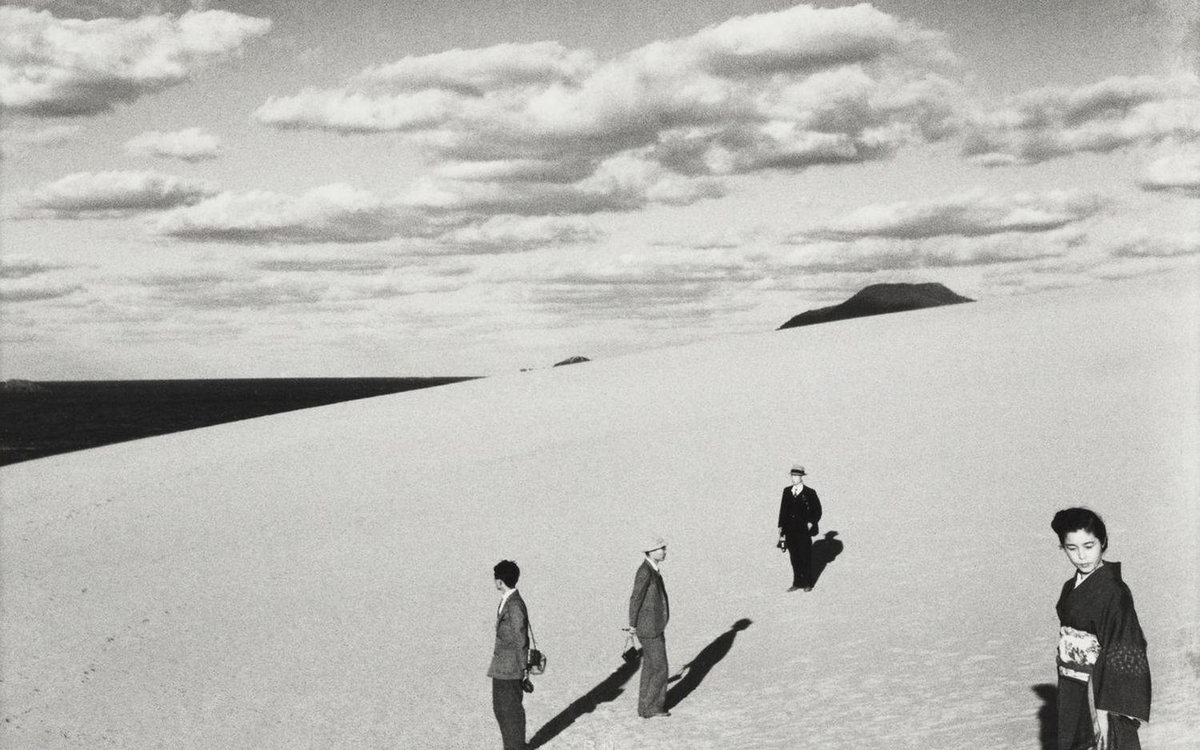
Organized as part of the celebrations marking the bicentenary of the birth of photography, this exhibition traces, through 300 works — including 250 photographic prints, mostly in black and white, and about fifty rare books from the collections of the BnF — the evolution of photographic practice in Japan over the past 80 years. The exhibition in briefFrom the late 1960s onward, the Bibliothèque nationale de France established itself as one of the first Western institutions to take an interest in modern and contemporary Japanese photography. Already in possession of a remarkable collection of Japanese prints from the 17th to the 19th centuries, it gradually built up an exceptional photographic collection. Held in the Department of Prints and Photography, this collection brings together nearly 4,000 prints by some 200 artists and reporters, as well as about a hundred emblematic magazines and books tracing the history of Japanese photography since 1945. This body of work, among the most significant in the Western world, was assembled with the collaboration of Japanese photographers who settled in France in the second half of the 20th century and became ambassadors of the extraordinary creative ferment of their archipelago. This major exhibition brings together around a hundred artists: authors now widely recognized on the international scene, but also other figures whose approaches and styles deserve to be discovered. The originality of the BnF's Japanese photographic collection also lies in the major thematic and aesthetic threads running through it. Sometimes grounded in reality, through reportages devoted to rural life, festivals, rituals or urban and economic expansion, sometimes theatrical, fanciful or poetic, Japanese photography gives essential place to sensations and atmospheres. It unfolds in works combining a remarkable simplicity of composition with great sophistication of printing. Facing realityReportage photography and its realism occupy a predominant place in postwar production, as shown by the reportages of Hiroshi Hamaya, the series by Hiromi Tsuchida or those of Yoko Yamamoto, contributing to the reconstruction of a common national foundation blending resilience after nuclear trauma, interest in ancestral customs and aspiration toward modernity. Strange everyday lifeMore intimate works, notably by authors of the Konpora Shashin movement such as Shigeo Gocho or Tokuko Ushioda, produced in the 1960s-1980s snapshots of ordinary experience. Through composition, framing or unexpected encounters, banality becomes tinged with strangeness. Staged bodiesThe theatrical stagings by Shoji Ueda, Eikō Hosoe and his students or also Yuki Onodera and Mami Kiyoshi, reveal the influence of the highly visual world of Japan's traditional performing arts. This section brings together numerous photographic research and experiments around the direction of bodies. Hello Paris!Many Japanese photographers featured in the BnF collection turned their gaze toward Paris, such as Ihei Kimura, Yoshi Takata, Keiichi Tahara, Mamoru Sakamoto or Jun Shiraoka, who came to work or even live in the French capital. These viewpoints, oscillating between curiosity and fantasy, the search for archetypes and known references, the concern to capture the particular and the rejection of any exoticism, reflect the fruitful exchanges between the two cultures. Calligraphies of the worldThe human figure gives way to the reign of forms, influenced by the Eastern art of calligraphy and a minimalism combining, as in the work of Shōmei Tōmatsu, Yasuhiro Ishimoto, Takehiko Nakafuji and even Sayuri Ichida, the quest for purity and excellence in contrast effects. Sensitive and impalpableThis section unfolds a universe of sensations and atmospheres, from the shadowy landscapes of Hiroto Fujimoto and Kazuo Amemiya to the elemental portraits captured by Koichiro Kurita and Sayuki Inoue (wind and water). The search for sensitive abstraction, following an artistic approach to nature often imbued with Zen Buddhism, is expressed in the materiality of the prints and books, between velvety nuances and a praise of shadow.
Source: Paris Open Data ↗