Premières Nations. Arts et cultures du Nord-Ouest de l’Amérique
Musée du quai Branly - Jacques Chirac
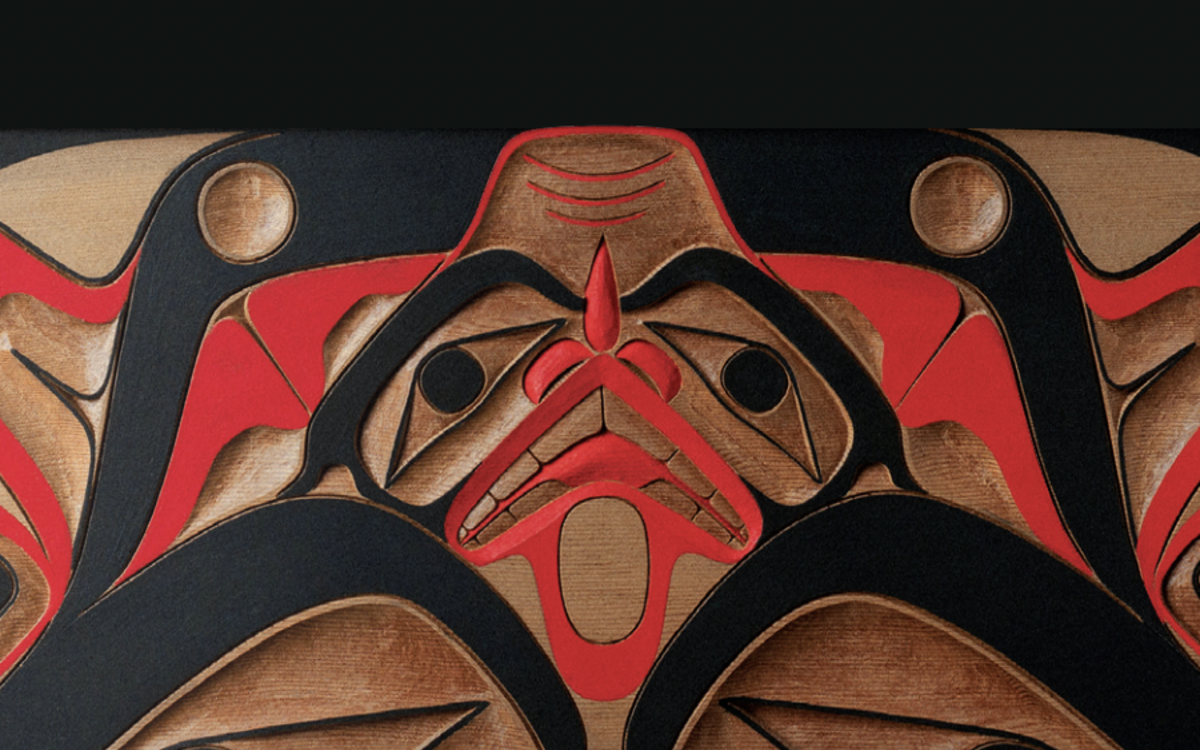
Between the Pacific Ocean and the rainforests, the First Nations of the northwest coast of America developed, over the centuries, societies of exceptional cultural, spiritual and political richness. Shaped by an extraordinary natural environment and by vast networks of exchange, these communities gave rise to original modes of thought, complex social structures, and a powerful art populated by mythical beings and founding narratives. By presenting their remarkable material and immaterial heritage, the exhibition invites visitors to discover the history and traditions of these societies, notably the potlatch, a system of exchanges and alliances that structured relations between nations, clans and villages. Profoundly disrupted from the 18th century onward by colonial expansion and globalization, these cultures nonetheless remain bearers of a vitality and creativity that are still very much alive. The voice of masksThe exhibition opens onto the world of masks, whose voices carry the narratives, beliefs and identities of the peoples of the northwest coast of the American continent and elsewhere. In many cultures, masks allow human consciousness to be expressed. Through their voice, they convey ancestral values, spiritual convictions, and aspects of identity. Behind this second face placed over the first, humans efface themselves to make way for emotions, the sacred, and political and social considerations. The first humansThe ecological context of the northwest coast of America is characterized by an exceptional richness of natural environments, whether marine, riverine or terrestrial. This region is distinguished notably by its vast forests of giant cedars, the resources drawn from its coastlines, as well as by a particularly rich sea, home to a great diversity of marine mammals. It is in this grandiose natural setting that the ancestors of today's First Nations settled, adapting to this rich natural environment and fostering the emergence, more than a thousand years ago, of the cultural pattern that distinguishes them. This context contributed to the development of an art populated by prodigious beings who explain the origin of the world and give meaning to life, death and the forces that govern the universe. Often depicted in the form of spirit-beings, these figures are the recognized ancestors of the most prestigious lineages and the first bearers of privileges and ancestral rights. The animals, motifs and signs that represent these beings obey precise stylistic rules, shared by many groups. This iconography covers almost every surface and is found inscribed as much on skin as on clothing and headdresses, on the walls of houses, on heraldic poles, on the sides of canoes, and on many objects, both ritual and utilitarian. Encounters and upheavalsAside from a few stranded Japanese junks, which explain the presence of iron among certain groups, the documented arrival of the first foreign individuals in the region hypothetically begins with the incursion of the British privateer and explorer Francis Drake (1579). It continues with the coming of the Russians (Vitus Bering, 1741), the Spanish (Juan Pérez, 1774), the English during the third and ill-fated voyage of Captain James Cook (1778), and the French with Jean-François de La Pérouse aboard La Boussole and L'Astrolabe (1786). The first European presences in the region should not be interpreted as ventures of exploration. Such ventures, which aimed to "discover the world," had largely been completed during the preceding century. In the region, the Russians, the Spanish and the English took part, through the fur trade, in the first great process of globalization between Europe, America and China. The exhibition's itinerary revisits these first colonial ventures and the introduction of the market economy. The inevitable clash of cultures that followed is evoked, as well as the confrontations, the arrival of Old World diseases that decimated Indigenous populations, and colonial prohibitions extending as far as the banning of the potlatch (1884-1951) and the seizure of belongings and other objects of power. Society and powerThe exhibition sheds light on the different forms of social organization of the First Nations, their chieftainship systems, as well as their political and ritual practices. Village groups shared knowledge and beliefs and displayed elaborate social structures organized into exogamous clans, often matrilineal. At the time of the first contacts with Europeans, in the 18th century, this way of life was shared by more than twenty Nations speaking different languages, distributed over roughly 1,800 kilometers of coastline. From the 19th century onward, the European presence destabilized the complex balance of these social structures: British colonization of the region and the creation of Canada (1867) brought about numerous social and economic upheavals that shook the First Nations, affected by infectious diseases and the impact of national integration policies. This section also shows the concerted efforts of the First Nations to maintain a cultural identity despite the profound ruptures with ancestral practices, resulting from epidemics, colonizing pressures, loss of territory, as well as the effects of the Indian Act of 1876, which consisted of active assimilation policies and the banning of the potlatch, between 1885 and 1951. Spiritual worldThe social structure and the spiritual world of the First Nations are closely linked. The rights and privileges of chiefs and clans find their origin and legitimacy in the connection
Source: Paris Open Data ↗