Youssef Nabil. De rêver encore
Musée d'Orsay
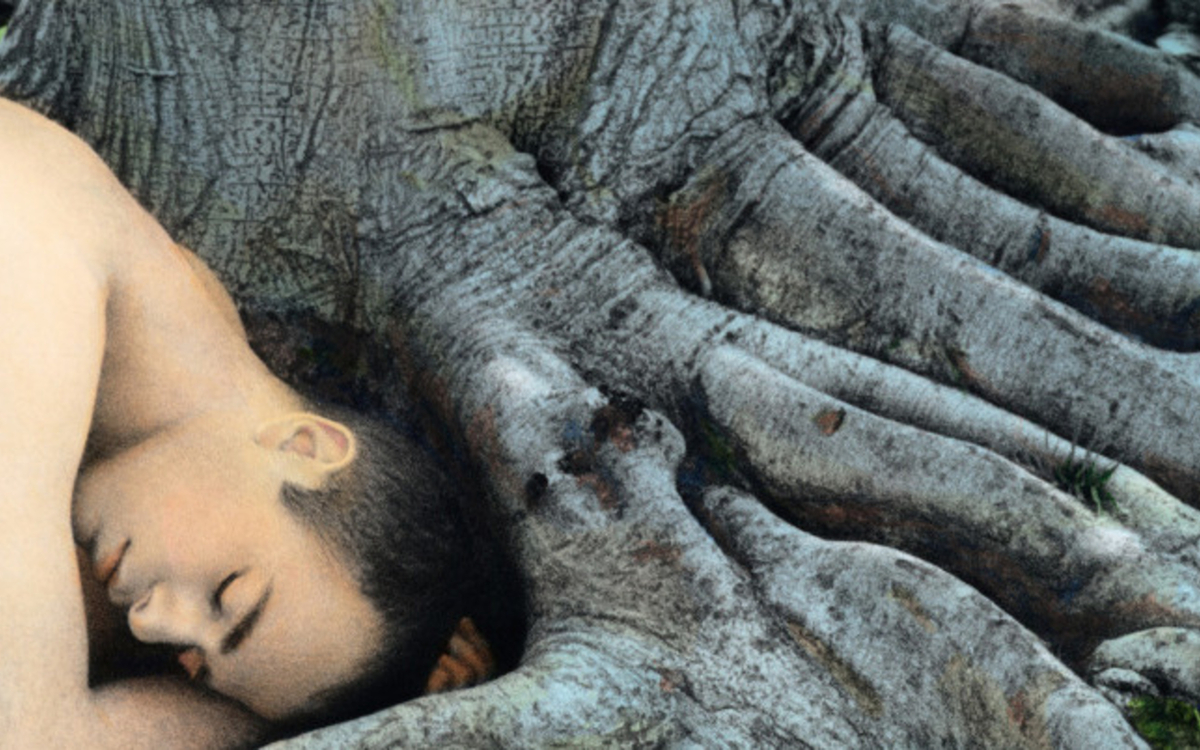
Since the 1990s, the Franco-Egyptian photographer and video artist Youssef Nabil, born in 1972, has been building a body of work with a very strong visual identity to which the musée d'Orsay has contributed in a decisive way. His first visit to France and his discovery of the museum's collections, in 1992, remain a source of inspiration that has permeated his work for more than thirty years, as evidenced by the self-portrait The Dream (2021), in the lineage of Le Rêve by Puvis de Chavannes. The exhibition of Youssef Nabil, which makes him the first artist to occupy the orientalist gallery, is an opportunity to place his works in perspective with those that marked him within this space, which, together with symbolism, forms the heart of this aesthetic dialogue. The black-and-white gelatin silver prints, enhanced by Youssef Nabil using an old hand-colouring technique, evoke the glorious and fantasized Egypt of his childhood – the artist's country of birth – and conjure visual atmospheres with velvety tones. His work, which draws on the registers of dream and nostalgia, seeks to move beyond purely identity-based questions in order to embody a borderless, fantasized and idealized Mediterranean world. Egypt is, in the artist's eyes, the setting for a sensual and consenting orientalism, with images that take up its codes: warm, tangy colours, bathed in a peaceful atmosphere made of desires and dreams, staging a free Orient, without taboo or censorship. Beyond orientalism, the aesthetic of the pared-down settings, evoking blues and whites unified in effects of transparency, reflects the artist's symbolist influences. The themes of exile, rebirth and dream are omnipresent in his work. The postures, seen from behind, of his self-portraits – though faceless – are tinged with melancholy and maintain an air of mystery. The hanging follows the chronological journey of an artist of our time in five major stages, interwoven with transhistorical echoes. The rich collection of 19th-century photographs from expeditions to Egypt opens the exhibition on a distinction between artistic production in the Orient and orientalism. Building on this historical foundation, the exhibition unveils works dealing with the artist's youth, then his first encounter with the musée d'Orsay during his first trip to France in 1992, the third stage of the itinerary mobilizing figures who served as guardians for him, such as Pierre Puvis de Chavanne or Odilon Redon. The penultimate room is devoted to the crossed identities represented by Nabil, on either side of the Mediterranean, drawing on the symbols of the Orient and the Occident in syncretic creations. Finally, two of the artist's videos are screened in a room that echoes his passion for the medium of cinema.
Source: Paris Open Data ↗